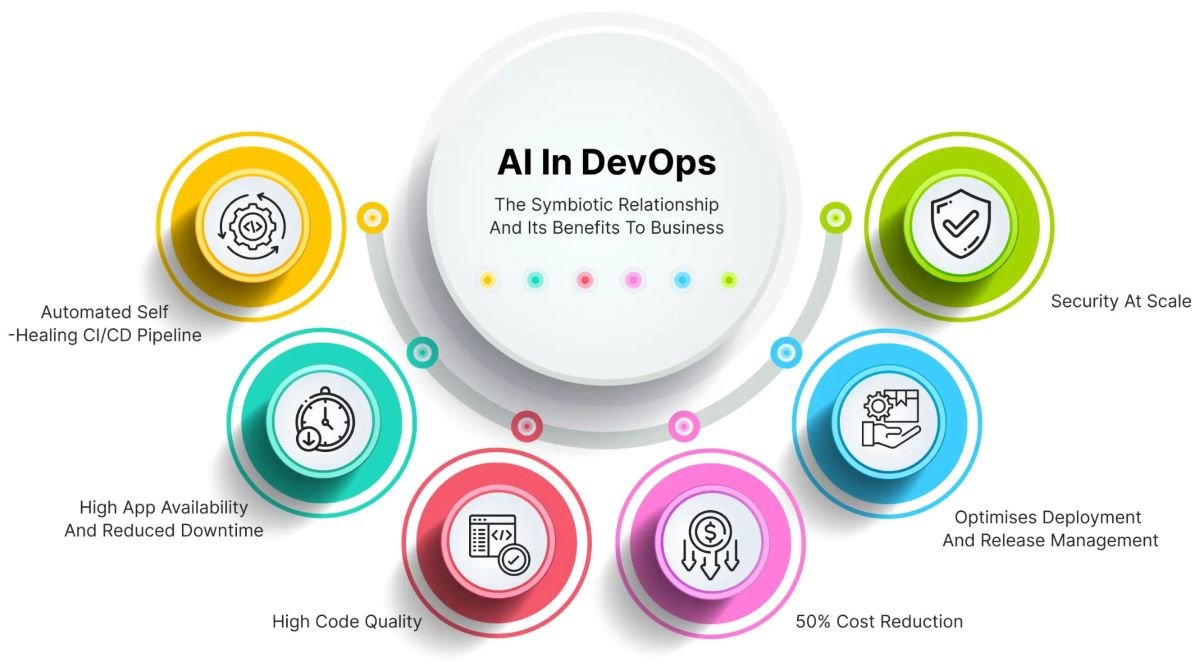
Modern software teams are under constant pressure to release applications faster while maintaining reliability, security, and performance. Traditional DevOps practices have already improved collaboration between development and operations teams, but the growing complexity of cloud infrastructure and software environments is creating new challenges.
AI DevOps tools are emerging as a practical solution. By combining artificial intelligence with DevOps workflows, these tools can automate repetitive tasks, analyze system data, detect problems, assist developers, and improve software delivery processes.
What Are AI DevOps Tools?
AI DevOps tools are software solutions that use artificial intelligence, machine learning, automation, and data analysis to support DevOps activities.
They can assist with areas such as:Ultimate Guide to AI Development Tools
- Code development
- Continuous integration and deployment
- Infrastructure management
- Application monitoring
- Incident detection
- Log analysis
- Security testing
- Performance optimization
- Release management
Instead of relying entirely on predefined rules, AI-powered DevOps platforms can analyze large amounts of technical data and identify patterns that may be difficult to detect manually.
How AI Is Used in DevOps
AI can be integrated into different stages of the software development lifecycle.
AI-Assisted Code Development
AI coding assistants can help developers generate code, explain existing code, identify potential bugs, and suggest improvements.
For DevOps teams, this can reduce the time required to create scripts for deployment, infrastructure configuration, testing, and automation.
AI can also assist with configuration files and repetitive infrastructure tasks, although generated code should always be reviewed before being used in production environments.
Intelligent CI/CD Automation
Continuous integration and continuous delivery pipelines can involve many automated steps, including building applications, running tests, scanning code, and deploying releases.
AI can analyze pipeline activity and help identify failed builds, recurring errors, and unusual deployment behavior.
This can make AI-powered CI/CD more efficient by helping teams identify problems earlier in the delivery process.
Key Benefits of AI DevOps Tools
Faster Software Delivery
Automation can reduce the amount of manual work required during development and deployment.
AI can help generate scripts, analyze test results, summarize logs, and identify potential deployment issues. This allows teams to focus more on development and strategic engineering work.
Intelligent Monitoring
Modern applications generate huge volumes of logs, metrics, and traces.
AI-powered monitoring tools can analyze this information continuously and identify unusual behavior. Instead of manually examining thousands of events, engineers can receive alerts based on potentially important patterns.
Faster Incident Detection
When production systems experience problems, response time matters.
AI can analyze application metrics and historical system behavior to help detect anomalies. Some tools can correlate multiple events and provide engineers with additional context about a potential incident.
Reduced Repetitive Tasks
DevOps teams frequently perform repetitive activities such as checking logs, reviewing alerts, updating configurations, and investigating similar errors.
AI automation can assist with these workflows and reduce unnecessary manual effort.
AI for DevOps Monitoring and Observability
Observability is one of the most important areas for AI in DevOps.
AI-Powered Log Analysis
Application logs can contain millions of individual events. Finding meaningful information manually can be difficult.
AI log analysis tools can categorize events, identify unusual patterns, summarize errors, and help engineers investigate incidents more efficiently.
Predictive Monitoring
Machine learning can analyze historical metrics to identify changes in system behavior.
For example, an AI monitoring system may detect unusual resource consumption or increasing response times before they become major operational problems.
However, predictions are not guaranteed. Teams should treat AI-generated warnings as signals that require appropriate technical validation.
AI DevOps Tools for Security
Security is increasingly connected with DevOps through DevSecOps practices.
AI-powered security tools can analyze source code, dependencies, configurations, and infrastructure for potential vulnerabilities.
They may help identify suspicious behavior, prioritize security findings, and reduce the amount of manual investigation required.
Automated Vulnerability Detection
AI can help security teams examine large numbers of dependencies and code components.
Instead of treating every finding equally, intelligent systems may provide additional context that helps teams determine which issues require immediate attention.
AI Infrastructure Management
Cloud infrastructure can become complicated as applications scale.
AI DevOps solutions can help teams monitor servers, containers, Kubernetes environments, cloud resources, and infrastructure configurations.
Some tools can recommend resource adjustments based on observed workloads.
This can support AI infrastructure automation and help organizations manage increasingly complex environments.
AI for Incident Management
Incident response is another area where artificial intelligence can provide useful assistance.
An AI system can summarize alerts, collect information from monitoring systems, identify related events, and provide troubleshooting suggestions.
Root Cause Analysis
Finding the root cause of an incident often requires examining multiple sources of information.
AI can correlate logs, metrics, deployment records, and system events to help engineers investigate possible causes.
The final diagnosis should still be verified by experienced engineers because complex incidents can have multiple interacting causes.
Challenges of AI DevOps Tools
AI DevOps technology also introduces several challenges.
Accuracy
AI-generated recommendations are not always correct. Incorrect deployment suggestions or automated changes can create serious problems if they are not reviewed.
Security Risks
Giving AI systems access to infrastructure, repositories, or production environments requires careful permission management.
Organizations should follow the principle of least privilege and maintain appropriate monitoring.
Data Quality
AI systems depend on the information available to them. Poor logs, incomplete metrics, or inconsistent infrastructure data can reduce the quality of AI-generated insights.
How to Choose AI DevOps Tools
Before adopting an AI DevOps solution, consider its integration capabilities, security controls, supported platforms, automation features, and transparency.
A useful tool should fit naturally into existing workflows rather than forcing an organization to completely redesign its DevOps environment.
Teams should also evaluate whether the tool provides explanations for recommendations and allows humans to review important actions.
The Future of AI in DevOps
The future of AI DevOps automation will likely involve increasingly intelligent software delivery and infrastructure management.
AI assistants may become more capable of analyzing entire application environments, coordinating development workflows, identifying operational risks, and assisting engineers during complex incidents.
The goal should not simply be to automate everything. Effective AI DevOps adoption means using artificial intelligence where it provides measurable value while keeping appropriate human oversight for critical decisions.
Conclusion
AI DevOps tools are changing how development and operations teams build, deploy, monitor, and maintain software. From AI-assisted coding and intelligent CI/CD pipelines to automated monitoring, incident analysis, and infrastructure management, these technologies can reduce repetitive work and improve operational visibility.
However, AI is not a substitute for experienced DevOps engineers. Its recommendations need validation, particularly when systems involve production infrastructure, security, or sensitive data.
When implemented carefully, AI-powered DevOps can become a valuable layer of automation that helps modern software teams deliver reliable applications more efficiently.






One thought on “AI DevOps Tools: How Artificial Intelligence Is Transforming Software Delivery”