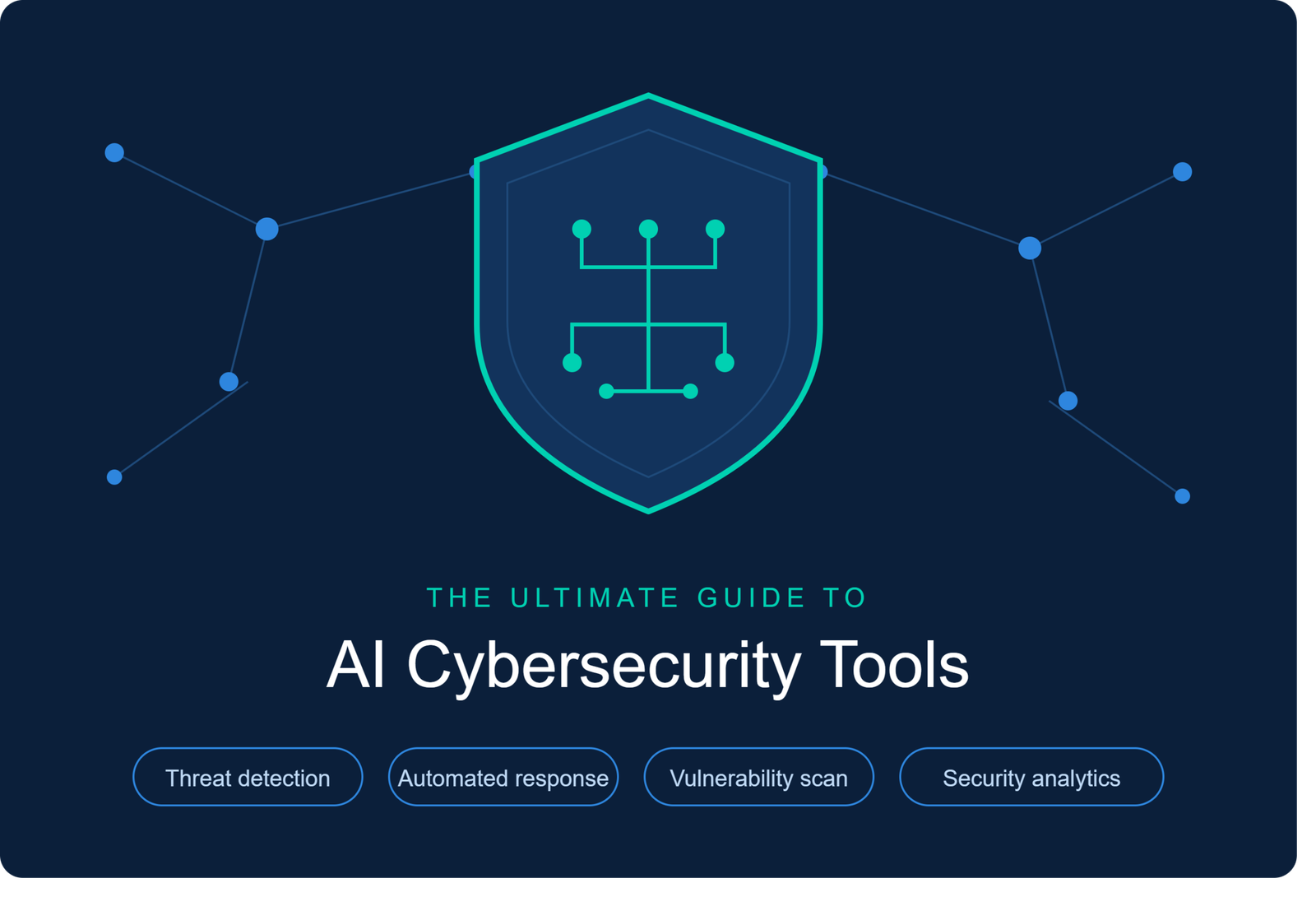
Cybersecurity threats are becoming faster, more automated, and harder to detect. At the same time, artificial intelligence is changing how organizations monitor networks, analyze security data, identify vulnerabilities, and respond to incidents.
AI cybersecurity tools use machine learning, behavioral analysis, automation, and increasingly generative AI to help security teams detect suspicious activity and respond to potential threats. NIST notes that AI can support cybersecurity activities such as continuous monitoring, vulnerability identification, threat detection, and incident response.
For businesses, startups, and security professionals, the goal is not simply to add an AI tool. The real objective is to use AI where it improves visibility, reduces repetitive work, and helps security teams make faster decisions.
What Are AI Cybersecurity Tools?
AI cybersecurity tools are software solutions that apply artificial intelligence or machine learning to security operations.
Traditional security systems often depend heavily on predefined rules and signatures. AI-powered systems can additionally analyze patterns, behaviors, relationships, and large volumes of security data to identify unusual activity. Emirra Cart
Common capabilities include:
- Threat detection
- Malware analysis
- Network monitoring
- Endpoint protection
- Vulnerability management
- Phishing detection
- Identity and access monitoring
- Security operations automation
- Incident response
- User behavior analytics
Modern AI security platforms may combine several of these capabilities rather than focusing on only one task.
How AI Is Used in Cybersecurity
AI can assist cybersecurity teams across multiple stages of the security lifecycle.
Threat Detection and Monitoring
AI-powered threat detection tools can analyze network traffic, system events, authentication activity, and other security signals.
Instead of examining every event manually, security teams can use behavioral analytics to identify unusual patterns that deserve investigation.
NIST’s Cybersecurity Framework 2.0 defines Detect around finding and analyzing possible attacks, compromises, anomalies, and indicators of compromise.
AI-Powered Malware Detection
AI can help security software identify suspicious files and applications by examining their behavior and characteristics.
This can complement traditional signature-based antivirus technology, particularly when organizations encounter previously unseen or rapidly changing threats.
However, AI detection should not be treated as perfect. Security teams still need multiple defensive layers, regular updates, and human investigation.
Phishing and Email Security
AI email security tools can analyze messages for suspicious links, unusual sender behavior, malicious attachments, impersonation patterns, and other indicators.
This is especially useful because phishing attacks can change quickly and may not always match a simple predefined rule.
Vulnerability Management
AI can also support vulnerability identification and prioritization.
Rather than treating every vulnerability as equally urgent, security platforms can combine vulnerability information with asset data, exposure, and other signals to help organizations determine which issues require attention first.
Major Types of AI Cybersecurity Tools
The AI cybersecurity market includes several important categories.
1. AI Endpoint Security
Endpoint security tools protect devices such as laptops, desktops, and servers.
AI-based endpoint protection can monitor processes, applications, files, and user activity for suspicious behavior.
2. AI Network Security
AI network security solutions analyze traffic and communication patterns to identify potentially malicious activity.
They can be useful for detecting unusual connections, abnormal traffic patterns, and possible intrusion attempts.
3. AI SIEM and Security Analytics
Security Information and Event Management platforms collect security events from multiple systems.
AI-enhanced SIEM and security analytics platforms can help correlate large amounts of information and surface potentially important incidents for analysts.
4. AI Vulnerability Scanners
These tools help organizations discover weaknesses across applications, infrastructure, and devices.
AI can assist with analyzing vulnerability data, reducing noise, and identifying relationships between assets and security risks.
5. AI Security Copilots
Generative AI is increasingly being used as an assistant for security professionals.
An AI security copilot can help summarize alerts, explain technical findings, generate investigation queries, and assist analysts with repetitive documentation.
The important point is that AI assistance should complement—not automatically replace—security expertise.
Benefits of AI Cybersecurity Tools
Faster Threat Analysis
Security teams may receive thousands of alerts. AI can help process large datasets and highlight unusual or potentially important activity.
Reduced Manual Work
Automating repetitive investigation and monitoring tasks allows security professionals to spend more time on complex incidents.
Continuous Monitoring
AI-powered systems can operate continuously, helping organizations monitor environments outside normal working hours.
Improved Security Visibility
When information from endpoints, networks, identities, applications, and cloud environments is analyzed together, organizations can gain a broader picture of potential security risks.
Limitations and Risks
AI cybersecurity tools are not a magic solution.
AI systems can produce false positives, miss threats, or make incorrect classifications. Attackers can also target AI systems themselves.
NIST’s adversarial machine learning research identifies attack categories including evasion, poisoning, privacy attacks, and misuse attacks affecting different types of AI systems.
Organizations should therefore monitor AI systems, validate important findings, control access to security data, and maintain human oversight.
NIST’s emerging Cyber AI Profile specifically addresses both cybersecurity risks associated with AI and opportunities to use AI to strengthen cybersecurity capabilities. (NIST Computer Security Resource Center)
How to Choose AI Cybersecurity Software
Before selecting an AI security platform, consider your organization’s actual requirements.
Define the Security Problem
Do you need endpoint protection, phishing detection, vulnerability management, SOC automation, cloud security, or broader threat detection?
Start with the problem rather than the AI label.
Check Integration
The tool should work with your existing security infrastructure where possible. Consider integrations with identity providers, cloud platforms, endpoints, SIEM systems, ticketing tools, and monitoring solutions.
Evaluate Explainability
Security analysts need to understand why a system generated an alert or recommendation.
A tool that produces unexplained results can create additional investigation work.
Review Data and Privacy Controls
Understand what information the platform collects, where it is processed, how long it is retained, and who can access it.
This becomes particularly important when security systems process sensitive organizational information.
Best Practices for Using AI in Cybersecurity
A strong AI security strategy should combine automation with established cybersecurity practices.
Use AI to improve detection and analysis, but maintain access controls, patch management, backups, employee awareness training, incident response procedures, and regular security assessments.
Organizations can also use the NIST Cybersecurity Framework 2.0 as a structured approach for managing cybersecurity risk. NIST’s current resources include guidance for using AI in analyzing, planning, implementing, and monitoring CSF outcomes.
Final Thoughts
AI cybersecurity tools are becoming an important part of modern security operations. They can help organizations analyze large amounts of information, detect unusual behavior, automate repetitive tasks, and support faster incident investigation.
But buying an AI-powered security product does not automatically create a secure organization. The strongest approach is to combine AI threat detection, endpoint security, network monitoring, vulnerability management, identity protection, human expertise, and established security frameworks.
As AI adoption continues, organizations must protect not only their traditional infrastructure but also the AI systems, models, data, and workflows they increasingly depend on.





7 thoughts on “Ultimate Guide to AI Cybersecurity Tools”