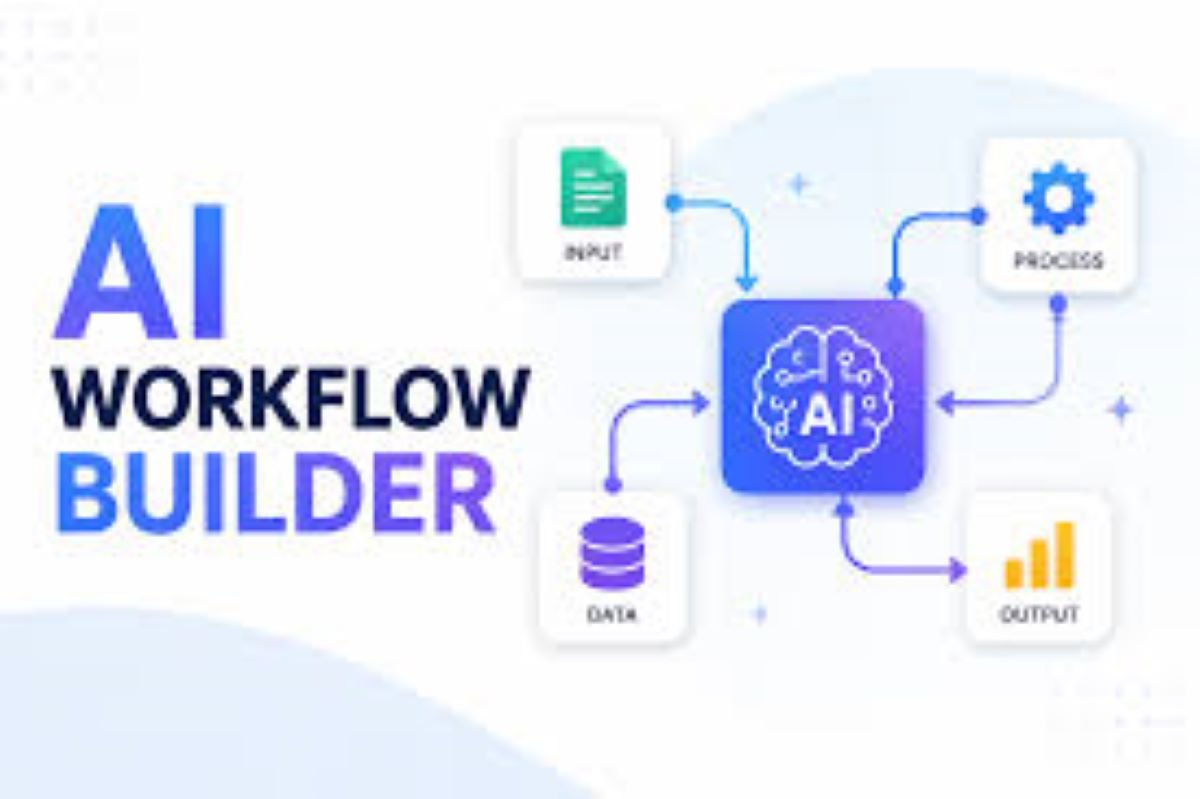
Artificial intelligence has changed how businesses approach repetitive work, data processing, customer communication, and operational decision-making. AI-powered workflows can now perform tasks that once required hours of manual effort. However, full automation is not always the right answer.
Some business decisions require experience, judgment, context, or accountability. This is where an AI workflow builder with human approval becomes valuable. It combines automated AI processes with human oversight, allowing businesses to automate routine work while keeping people involved at critical decision points.
This approach creates a balance between efficiency and control, making AI automation more practical for startups, growing companies, and enterprise teams.
What Is an AI Workflow Builder With Human Approval?
An AI workflow builder with human approval is a platform or system that allows users to create automated workflows while adding human review steps when necessary.
Instead of allowing AI to complete every action independently, the workflow can pause at a predefined stage and request approval from a person.
For example, an AI system could analyze a customer request, prepare a response, and recommend the next action. Before the message is sent, a team member can review and approve it.AI-Native No-Code Workflow Automation
This model is often called human-in-the-loop automation.
It allows AI to handle repetitive processing while humans remain responsible for important decisions.
How Human Approval Works in AI Workflows
A typical workflow can contain several automated stages followed by an approval checkpoint.
Step 1: Start With a Trigger
The workflow begins when a specific event occurs. This could be a new customer inquiry, form submission, support ticket, document upload, or sales opportunity.
The trigger starts the automation without requiring someone to manually launch the process.
Step 2: Let AI Process the Information
The AI analyzes the available information and performs the assigned task.
It might summarize a document, classify a support request, extract important data, generate a response, or evaluate a business request according to predefined criteria.
Step 3: Request Human Approval
If the next action has significant consequences, the workflow pauses.
A designated employee receives the AI-generated result and can review the information before approving, rejecting, or modifying the proposed action.
Step 4: Continue the Workflow
Once approval is received, the automation continues automatically.
If the request is rejected, the workflow can send it back for revision, assign it to another employee, or follow a different process.
This creates a flexible AI approval workflow instead of a completely autonomous system.
Why Human-in-the-Loop Automation Matters
AI can process large amounts of information quickly, but speed does not guarantee accuracy.
AI systems can misunderstand context, produce incorrect information, or make inappropriate recommendations. Human review provides an additional layer of control.
Reduce Risk
Human approval can prevent incorrect AI outputs from reaching customers, employees, or external systems.
This is especially important when workflows involve financial transactions, legal documents, sensitive communications, or important business decisions.
Maintain Accountability
A human approval step creates a clear responsibility point.
Organizations can determine who reviewed an AI-generated recommendation and whether the decision was approved, rejected, or modified.
Improve AI Reliability
Human feedback can also help organizations identify weaknesses in their automated processes.
Over time, teams can refine prompts, rules, approval conditions, and workflow logic based on real-world results.
Common Use Cases for AI Workflows With Approval
An AI workflow builder with human approval can be used across many departments.
Marketing Content Review
AI can create social media posts, email drafts, product descriptions, or campaign ideas.
Instead of publishing automatically, the workflow can send the content to a marketing manager for approval.
Customer Support
AI can analyze incoming support tickets and prepare suggested responses.
Simple requests may be handled automatically, while sensitive complaints or unusual cases can require human approval.
Sales Operations
AI can qualify leads, summarize conversations, and recommend follow-up actions.
A salesperson can review the recommendation before an important email or sales action is executed.
Document Processing
Businesses can use AI to extract information from invoices, applications, contracts, and other documents.
A human reviewer can verify important information before it enters a financial or operational system.
Employee Requests
AI can process routine employee requests and determine whether they meet predefined criteria.
Requests that require managerial judgment can automatically be routed to an appropriate approver.
Building an Effective AI Approval Workflow
Successful automation requires more than simply adding an approval button.
Define Approval Conditions
Not every task needs human intervention.
Businesses should identify specific conditions that require review. For example, an approval may be triggered when a transaction exceeds a certain value or when an AI confidence score falls below a defined threshold.
Give Reviewers Useful Context
A reviewer should not have to search through multiple systems to understand the AI’s recommendation.
The approval interface should provide relevant information, the proposed action, supporting data, and available options.
Create Clear Escalation Rules
Some requests may remain unresolved if an employee does not respond.
A strong workflow should define what happens when approval is delayed, rejected, or unavailable. The system might send a reminder, escalate the request, or assign it to another reviewer.
Benefits of AI Workflow Automation With Human Oversight
Combining automation with human approval offers several advantages.
Greater efficiency: AI handles repetitive processing while employees focus on important decisions.
Better control: Humans can stop incorrect or inappropriate actions before they are completed.
Improved consistency: Workflows follow predefined processes instead of relying entirely on individual habits.
Scalability: Teams can process larger volumes of work without manually handling every step.
Better decision-making: AI provides analysis and recommendations while humans contribute experience and business judgment.
The Future of Human-Controlled AI Automation
The future of business automation is unlikely to be purely human or purely autonomous. Instead, many organizations will use hybrid workflows where AI handles routine tasks and humans control important decisions.
Modern AI workflow builders are making this model increasingly accessible. Users can design workflows visually, connect applications, define approval checkpoints, and establish conditions without building complex software from scratch.
This creates a practical path toward responsible AI adoption.
Conclusion
An AI workflow builder with human approval gives businesses the benefits of automation without removing human control from important processes. AI can handle repetitive analysis, generate recommendations, organize information, and prepare actions, while employees remain involved where judgment matters.
The goal is not to automate every decision. The smarter approach is to automate what machines do well and reserve critical decisions for people.
For organizations looking to increase productivity while maintaining accuracy, accountability, and control, human-in-the-loop AI workflow automation offers a strong foundation for the next generation of business processes.






One thought on “AI Workflow Builder With Human Approval”