Video subtitles play an important role in making content accessible and easy to understand. However, missing captions can interrupt the viewing experience and cause viewers to miss important information. An AI Tool to Detect Missing Subtitles in Videos helps creators identify these gaps automatically. It uses automatic speech recognition, subtitle synchronization, and AI-powered video analysis to compare spoken dialogue with existing captions.
This technology makes subtitle checking faster and reduces the need for manual reviews. Whether you create YouTube videos, educational lessons, or business presentations, an AI subtitle checker can help improve caption accuracy, accessibility, and overall video quality before publishing.
What Is an AI Tool to Detect Missing Subtitles in Video?
An AI tool to detect missing subtitles in video is software that analyzes video content and identifies sections where spoken dialogue does not have corresponding captions. It checks the relationship between audio, video timing, and subtitle text.
Traditional subtitle reviews require people to watch videos carefully while following subtitle files. This process takes time, especially when working with long recordings. AI-powered systems simplify the process by identifying possible caption gaps automatically.
These tools can help creators discover missing dialogue, incomplete captions, timing problems, and sections without subtitles. Some advanced solutions also use speech recognition to compare spoken words with existing subtitle text.AI Subtitle Checker for Videos
Why Missing Subtitles Are a Problem
Subtitles do more than display spoken words. They make video content easier to understand for different audiences. Missing captions can create several problems for viewers and publishers.
Poor Viewing Experience
When subtitles suddenly disappear, viewers may miss important information. This becomes especially frustrating when someone watches videos without sound or in a noisy environment.
Accessibility Challenges
People with hearing difficulties often depend on captions to understand video content. Missing subtitles can make educational materials, entertainment, and business presentations less accessible.
Reduced Audience Engagement
Viewers may stop watching when captions are incomplete or difficult to follow. Consistent subtitles help maintain attention and improve the overall viewing experience.
Professional Quality Issues
Businesses and content publishers need polished videos. Repeated subtitle gaps can make otherwise professional content appear unfinished.
How Does AI Subtitle Detection Technology Work?
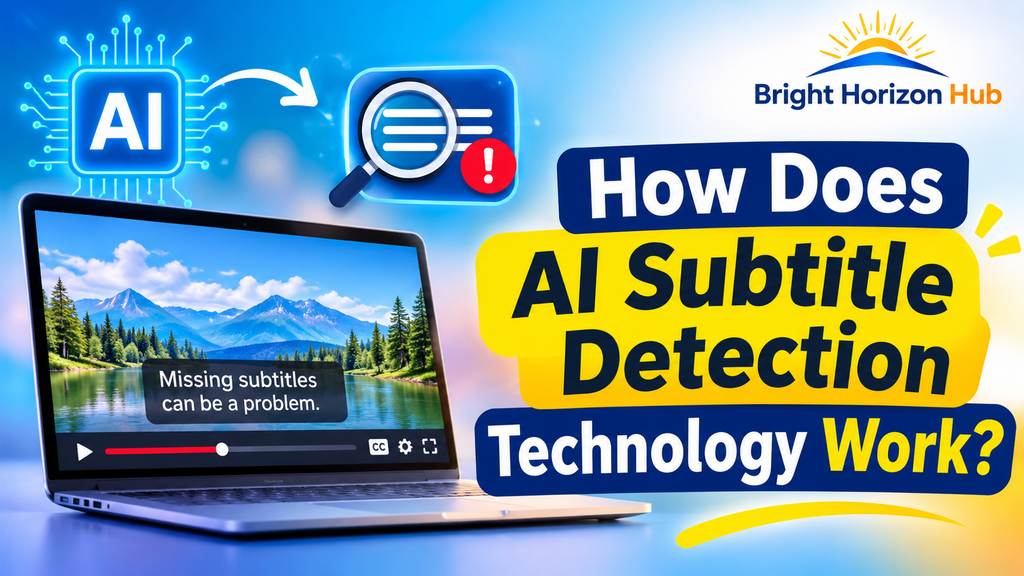
AI subtitle detection combines several technologies to examine video dialogue and caption coverage. The exact process depends on the software, but most systems follow similar steps.
1. Video and Audio Analysis
The software first processes the uploaded video and extracts its audio. It identifies speech segments, pauses, background sounds, and other relevant audio information.
This initial analysis helps the system understand where spoken dialogue appears throughout the recording.
2. Automatic Speech Recognition
Automatic speech recognition (ASR) converts spoken language into written text. The AI-generated transcript provides a reference for checking existing subtitles.
For example, if a speaker says five sentences but the subtitle file contains only four, the system can flag the missing section.
3. Subtitle File Comparison
The software compares recognized speech with available subtitle tracks. It checks whether dialogue has corresponding caption text and identifies possible gaps.
Common supported formats may include SRT, VTT, and other subtitle formats, depending on the tool.
4. Timestamp Verification
Accurate timing is essential for synchronized subtitles. AI systems examine timestamps to identify dialogue that appears without an active subtitle.
They can also detect unusually long gaps between captions or subtitle segments that start too late.
5. Missing Subtitle Reports
After analyzing the video, the software generates a report highlighting suspicious sections. Some tools provide timestamps, transcript comparisons, and suggested corrections.
This allows editors to review specific problems instead of watching the entire video repeatedly.
Key Features of an AI Subtitle Detection Tool
Not every subtitle checker offers the same capabilities. However, several features make these tools particularly useful.
Automatic Missing Caption Detection
The most important feature identifies spoken sections without matching subtitles. It helps creators locate caption gaps quickly.
Speech-to-Text Comparison
Speech recognition allows the software to compare actual dialogue with subtitle content. This makes it easier to identify missing sentences and incomplete transcripts.
Subtitle Timing Analysis
A reliable system checks whether captions appear at the correct moments. It can highlight subtitles that start too early, appear too late, or remain visible for inappropriate durations.
Multiple Subtitle Format Support
Professional editors often work with different subtitle formats. Support for SRT and VTT files makes subtitle checking more convenient.
Multilingual Subtitle Checking
Some AI tools support multiple languages. This feature helps international publishers review captions across different language versions.
However, language accuracy varies depending on the speech recognition model and audio quality.
How to Use AI to Find Missing Subtitles in a Video

Using an AI subtitle checker generally involves a straightforward workflow. The following steps explain how creators can approach the process.
Step 1: Upload Your Video
Start by selecting the video you want to inspect. Choose a supported format and make sure the audio is clear enough for speech recognition.
Step 2: Import the Subtitle File
Upload the existing subtitle file if you already have one. If subtitles are embedded in the video, check whether the software supports extracting or analyzing them.
Step 3: Start AI Analysis
Run the subtitle detection process. The system will examine spoken dialogue and compare it with the available captions.
Step 4: Review Missing Sections
Check the generated report for missing captions, incomplete sentences, and suspicious timestamp gaps.
Pay particular attention to fast conversations, overlapping voices, and scenes containing background noise.
Step 5: Correct and Export Subtitles
Edit the flagged sections and add missing dialogue. After making corrections, export the updated subtitle file and test it with your video.
A final playback review is important because automated detection cannot guarantee perfect results.
Best Use Cases for Automated Subtitle Detection
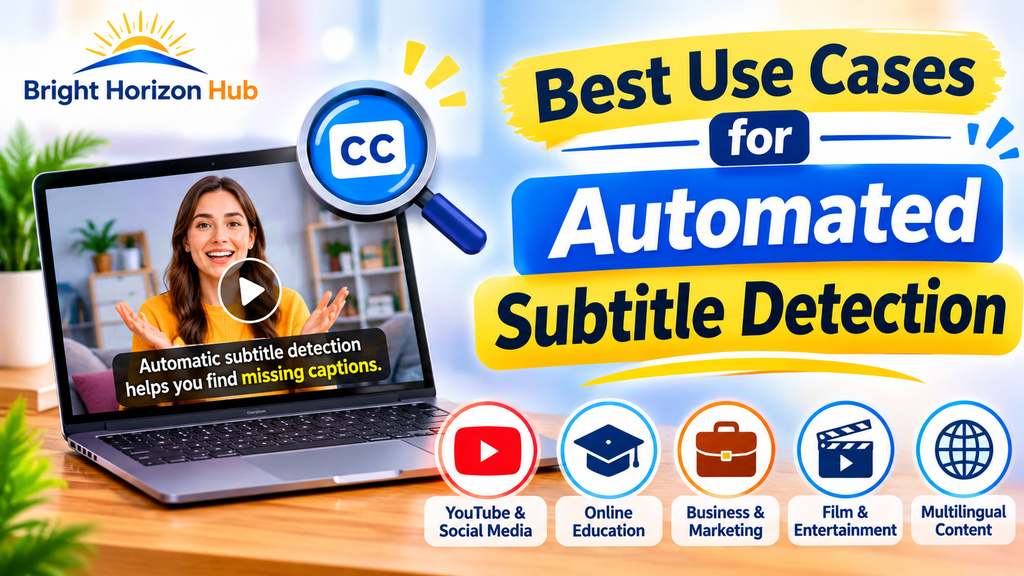
AI-powered subtitle checking can support different industries and content production workflows.
YouTube Videos and Social Media
YouTubers and social media creators frequently publish videos with subtitles. Automated checking helps them find missing captions before uploading content.
It is particularly useful for interviews, tutorials, product reviews, and short-form videos.
Online Education
Educational platforms use video lessons to explain complex subjects. Missing subtitles can interrupt learning and make important instructions difficult to understand.
Subtitle checking helps teachers and course creators maintain consistent captions.
Business and Corporate Videos
Companies publish training materials, presentations, webinars, and promotional videos. AI subtitle detection helps maintain professional communication standards.
Film and Entertainment
Film editors and production teams work with lengthy subtitle files. Automated analysis can help identify caption gaps before final distribution.
Marketing and Advertising
Marketing teams use short videos to promote products and services. Accurate captions make promotional content easier to follow, especially when viewers watch without audio.
AI Subtitle Detection vs. Manual Subtitle Checking
Both automated and manual checking methods have advantages. However, their effectiveness depends on the video length, content type, and required accuracy.
| Feature | AI Subtitle Detection | Manual Checking |
| Processing speed | Generally faster | Usually slower |
| Missing captions | Automated identification | Human observation |
| Timestamp analysis | Automated support | Manual review |
| Large video files | More scalable | Time-consuming |
| Context understanding | Model-dependent | Strong human judgment |
| Accuracy | Depends on audio and AI | Depends on reviewer |
AI is useful for identifying potential problems quickly. Human reviewers remain important for understanding context, correcting transcription errors, and checking unusual conversations.
The most effective approach combines automated detection with human quality control.
Common Challenges in AI Subtitle Detection
Although AI technology has improved subtitle workflows, it still has limitations.
Background Noise
Music, traffic, and environmental sounds can confuse speech recognition systems. Poor audio quality may cause the software to miss spoken words.
Multiple Speakers
When several people speak simultaneously, identifying individual sentences becomes difficult. Some systems may generate incomplete transcripts.
Accents and Pronunciation
Different accents, speaking speeds, and pronunciation styles can affect transcription accuracy. Less commonly supported languages may also produce weaker results.
Technical Vocabulary
Medical, scientific, and technical videos often contain specialized terminology. AI systems may misunderstand unfamiliar words or convert them incorrectly.
Subtitle Formatting Issues
Incorrect encoding, damaged files, and unusual timestamp structures can affect subtitle analysis. Checking file compatibility before uploading can prevent unnecessary errors.
Tips for Getting Better Results from AI Subtitle Checkers
You can improve subtitle detection by preparing your video files properly.
First, use clear audio whenever possible. Reducing background noise helps speech recognition identify dialogue more accurately.
Second, select the correct language before starting analysis. This reduces transcription mistakes caused by language mismatches.
Third, use properly formatted subtitle files. Check timestamps and encoding before uploading SRT or VTT documents.
Fourth, review every flagged section instead of accepting automatic corrections without checking them.
Finally, watch the completed video with subtitles enabled. This final step helps identify errors that automated systems might overlook.
How AI Subtitle Detection Improves Video Accessibility
Accessibility is an important part of modern video publishing. Captions help people understand spoken content in situations where listening is difficult or impossible.
An AI subtitle checker helps publishers identify missing caption sections before distribution. This supports more consistent viewing experiences across educational, professional, and entertainment platforms.
It also helps international audiences follow content through translated subtitles. However, accessibility requires more than simply detecting missing words. Publishers should also consider speaker identification, sound descriptions, readable formatting, and accurate synchronization.
Future of AI-Powered Subtitle Quality Control
AI subtitle technology will continue improving as speech recognition and natural language processing become more advanced.
Future systems may offer better speaker identification, multilingual comparisons, contextual error detection, and real-time subtitle monitoring.
Video editors could eventually receive automatic warnings whenever spoken dialogue lacks corresponding captions. Such features would make quality control easier for both independent creators and large production teams.
AI may also help identify incorrect words, duplicated captions, and poorly synchronized subtitles within a single workflow.
These developments could make subtitle quality assurance a standard part of professional video production.
Frequently Asked Questions (FAQs)
1. What is an AI tool to detect missing subtitles in video?
It is software that analyzes video audio and subtitle files to identify spoken sections without corresponding captions.
2. Can AI automatically find missing captions?
Yes. AI-powered systems can compare speech recognition transcripts with existing subtitles and highlight possible missing sections.
3. Which subtitle formats can AI tools check?
Depending on the software, common formats include SRT, VTT, and other supported subtitle files.
4. Can AI detect incorrect subtitle timing?
Yes. Some tools analyze subtitle timestamps and identify potential synchronization problems between spoken dialogue and captions.
5. Is AI subtitle detection better than manual checking?
AI is generally faster for identifying potential gaps, while human reviewers are better at understanding context. Combining both methods produces stronger results.
6. Can AI subtitle checkers support multiple languages?
Some tools support multilingual speech recognition and subtitle analysis. Their accuracy depends on language availability and audio quality.
7. Are AI subtitle detection tools suitable for YouTube creators?
Yes. They can help YouTube creators review captions, find missing dialogue, and improve video accessibility before publishing.
Conclusion
An AI tool to detect missing subtitles in video makes subtitle quality control faster and more efficient. It helps creators identify missing dialogue, incomplete captions, and potential synchronization problems without reviewing every second manually.
From YouTube channels and educational platforms to corporate presentations and entertainment, automated subtitle checking offers practical benefits across different industries. However, AI results should always receive a final human review.
The smartest approach combines speech recognition, timestamp analysis, and manual verification. This ensures more accurate captions, better accessibility, and a professional viewing experience.




One thought on “AI Tool to Detect Missing Subtitles in Videos”