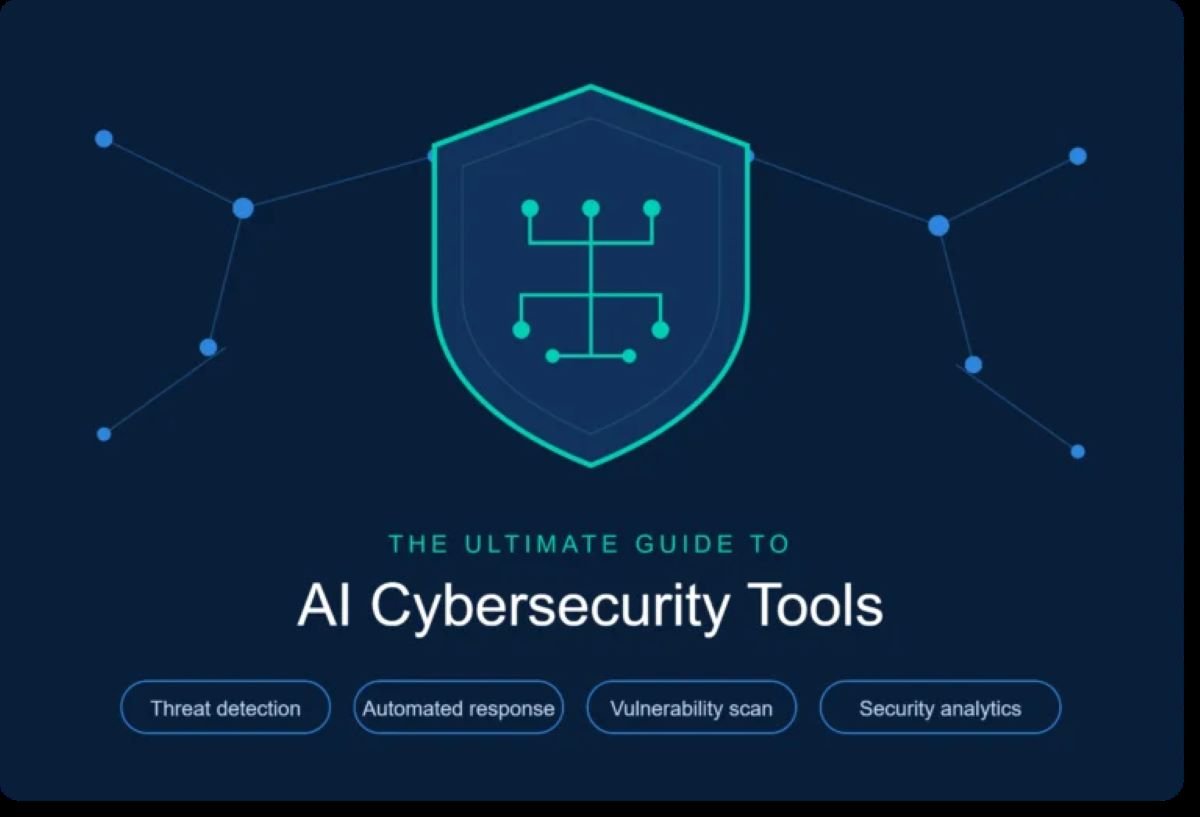
Cybersecurity has become more difficult as organizations manage cloud applications, remote devices, APIs, digital identities, and increasingly sophisticated attacks. At the same time, attackers are using artificial intelligence to automate phishing, malware development, social engineering, and reconnaissance.
AI cybersecurity tools are becoming an important part of modern security strategies because they can analyze large volumes of data, identify unusual behavior, prioritize threats, and automate parts of incident response. Modern platforms increasingly apply AI across endpoints, networks, identities, applications, cloud environments, and security operations.
However, “AI-powered” does not automatically mean better security. Organizations need to understand what a tool actually protects and how its AI capabilities fit into the wider cybersecurity architecture.
What Are AI Cybersecurity Tools?
AI cybersecurity tools are security solutions that use machine learning, behavioral analytics, artificial intelligence, or large language models to help detect, investigate, prevent, and respond to cyber threats.
Traditional security systems often depend heavily on predefined rules, signatures, and known indicators. AI-based systems can also analyze patterns and relationships in security telemetry to identify suspicious activity that may not exactly match a previously known attack.
Common capabilities include:
- AI threat detection
- Behavioral analysis
- Endpoint protection
- Network monitoring
- Identity threat detection
- Vulnerability prioritization
- Phishing detection
- Security operations automation
- Threat intelligence analysis
- AI-assisted incident investigation
The technology is also expanding into AI security, where the objective is to protect AI applications, models, agents, prompts, data, and tool access themselves. This is different from simply using AI to improve traditional cybersecurity.
How AI Is Used in Cybersecurity
AI Threat Detection
AI can analyze security events and look for abnormal patterns. Instead of examining every event independently, security platforms can correlate multiple signals and help analysts identify activity that deserves investigation.
This can be particularly useful when organizations generate large amounts of endpoint, network, identity, and cloud telemetry.
Behavioral Analytics
Behavior-based security looks at what users, devices, applications, and accounts normally do.
For example, an account that suddenly accesses unusual systems, downloads large quantities of data, or logs in from an unexpected environment may generate a risk signal.
Behavioral analytics can therefore complement traditional signature-based detection.
Automated Incident Response
AI cybersecurity software can assist with repetitive security operations tasks such as alert classification, investigation, summarization, and response recommendations.
Some platforms can also execute predefined actions automatically. Human approval and appropriate controls remain important for high-impact actions because incorrect automation can create additional operational problems.
Major Categories of AI Cybersecurity Tools
1. AI Endpoint Security
Endpoint detection and response (EDR) tools protect computers, servers, and other devices.
AI can help identify suspicious processes, ransomware behavior, credential attacks, and other malicious activity by analyzing endpoint behavior.
These tools are particularly useful for organizations managing large numbers of laptops, servers, and remote devices.
2. AI Network Security
Network detection and response (NDR) solutions analyze network traffic and communication patterns.
AI-powered network security can identify unusual connections, lateral movement, command-and-control activity, and possible data exfiltration.
Instead of relying exclusively on known malicious signatures, behavioral models can help identify deviations from normal network activity.
3. AI-Powered SIEM and SOC Tools
Security information and event management platforms collect security information from different systems.
AI can help security operations centers correlate events, summarize incidents, prioritize alerts, and accelerate investigations.
This is especially valuable for teams dealing with alert fatigue and limited security personnel. Current cybersecurity platforms increasingly combine AI assistance with SIEM, XDR, and security automation capabilities.
4. AI Vulnerability Management
Organizations can have thousands of vulnerabilities across applications, operating systems, cloud infrastructure, and dependencies.
AI vulnerability management tools can help prioritize vulnerabilities according to factors such as exposure, exploitability, asset importance, and potential business impact.
The goal is not simply to produce a longer vulnerability list. It is to help security teams determine which issues require attention first.
5. AI Application Security
AI-powered application security tools analyze source code, dependencies, APIs, and software development workflows.
They can assist developers with identifying insecure coding patterns, vulnerable dependencies, and potential application weaknesses earlier in the software development lifecycle.
6. AI Security for AI Systems
A newer category focuses specifically on protecting artificial intelligence systems.
This can include security for:
- Large language models
- AI agents
- Prompts
- Model APIs
- Training data
- Enterprise AI applications
- Tool and API permissions
- AI-generated actions
This distinction is increasingly important because an AI system can introduce security risks even when the underlying infrastructure is properly protected. Recent industry developments also show growing attention to controlling autonomous AI agents and monitoring their actions.
Benefits of AI Cybersecurity Tools
Faster Threat Detection
AI can process large volumes of security telemetry much faster than manual analysis.
This can help security teams identify suspicious activity earlier and reduce the time required to investigate incidents.
Reduced Alert Fatigue
Security analysts can receive enormous numbers of alerts. AI-assisted prioritization can help separate potentially meaningful signals from lower-priority events.
Improved Threat Hunting
AI can help analysts search across large datasets using behavioral patterns and natural-language queries, making complex investigations easier to initiate.
Security Automation
Routine tasks such as alert enrichment, incident summaries, investigation steps, and predefined response actions can be automated.
This allows security professionals to spend more time on complex investigations and security strategy.
Limitations and Risks
AI cybersecurity tools are not a replacement for experienced security teams.
Models can produce false positives, miss sophisticated attacks, or misunderstand unusual but legitimate activity. Poorly configured automation can also create operational risks.
Organizations should therefore evaluate:
- Detection accuracy
- False-positive rates
- Data privacy
- Integration capabilities
- Explainability
- Automation controls
- Vendor security
- Compliance requirements
- Total cost of ownership
AI itself can also become an attack surface. Researchers and security professionals continue to study adversarial AI, automated attacks, synthetic media, and AI-powered social engineering.
How to Choose AI Cybersecurity Software
Start with the security problem rather than the marketing label.
If endpoint protection is the primary concern, evaluate EDR and XDR capabilities. If network visibility is the problem, investigate NDR platforms. For security operations, consider SIEM, SOAR, and AI analyst capabilities.
Organizations using AI applications should additionally evaluate tools designed for model, agent, prompt, data, and runtime security.
Integration is equally important. A powerful security platform that cannot connect with your existing identity provider, cloud infrastructure, endpoint systems, ticketing platform, or SIEM may create another isolated security silo.
Best Practices for Implementing AI Security Tools
Begin with a clearly defined security objective.
Next, identify the data sources the AI system needs and determine what actions it is permitted to perform. Test automated responses in controlled environments before allowing them to affect production systems.
Maintain human oversight for sensitive decisions, regularly review detection performance, and monitor false positives.
Security teams should also continuously evaluate AI-specific risks as their use of automation and autonomous systems expands.
Final Thoughts
AI cybersecurity tools are changing how organizations detect threats, investigate incidents, manage vulnerabilities, and automate security operations. Their value comes from applying AI to specific security problems rather than simply adding an “AI” label to existing software.
The strongest cybersecurity strategy is usually layered: endpoint protection, network monitoring, identity security, application security, vulnerability management, threat intelligence, and security operations working together.
As AI becomes part of both cyberattacks and cyber defense, organizations will increasingly need to secure traditional IT environments and AI systems themselves. The practical objective is not to remove humans from cybersecurity, but to give security teams better visibility, faster analysis, and carefully controlled automation.





2 thoughts on “Ultimate Guide to AI Cybersecurity Tools”