Startups often operate with limited budgets, small teams, and ambitious growth targets. Managing repetitive tasks manually can quickly consume valuable time that could otherwise be spent on customers, product development, and strategy. AI workflow automation software with a free trial for startups offers a practical way to test automation without making a large upfront investment.
Modern AI automation platforms can help startups streamline tasks such as lead management, customer support, marketing, employee onboarding, data entry, reporting, and internal communication. A free trial also allows founders to evaluate whether a platform actually fits their workflow before paying for a subscription.
What Is AI Workflow Automation Software?
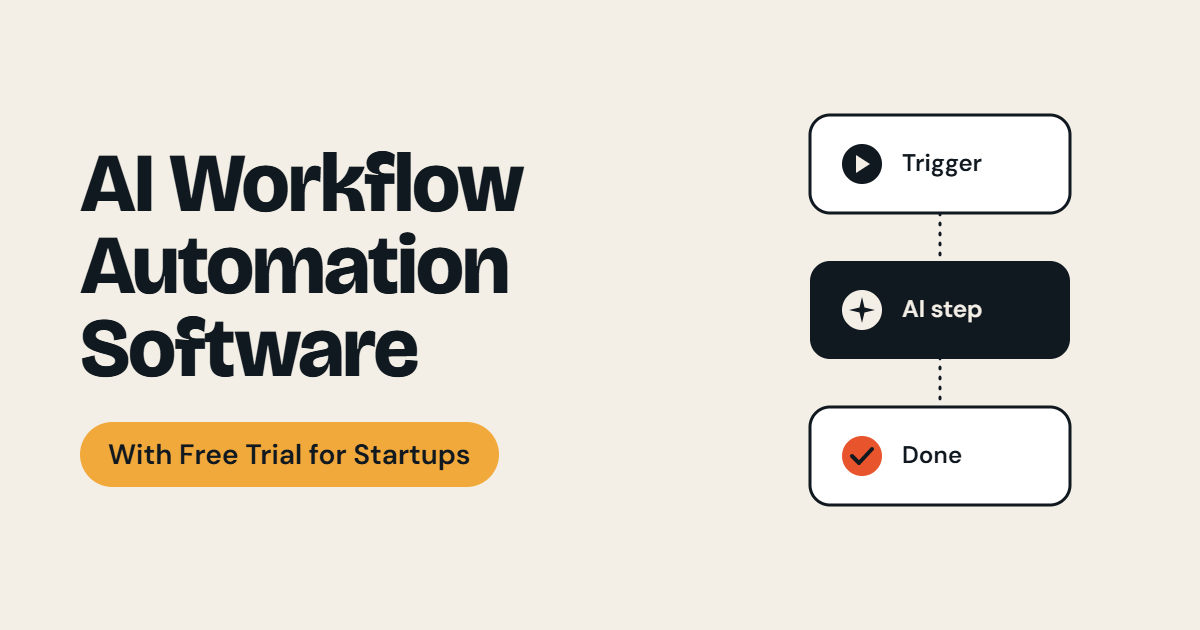
AI workflow automation software combines artificial intelligence with automated business processes. Instead of requiring employees to complete every step manually, the software can identify information, make decisions based on predefined rules, generate content, move data between applications, and trigger the next action automatically.
For example, when a startup receives a new customer inquiry, an automated workflow could:
Must Be Read:AI automation software for startup investor reporting
- Capture the customer’s information.
- Analyze the inquiry using AI.
- Categorize the lead.
- Add the contact to a CRM.
- Send a personalized response.
- Notify the appropriate sales representative.
- Schedule a follow-up task.
This type of AI-powered workflow automation can reduce repetitive work while creating more consistent business processes.
Why Startups Need Workflow Automation
Startups usually have fewer employees than established companies. One person may handle marketing, customer support, administration, and sales operations at the same time.
Manual processes become difficult to maintain as the business grows.
Save Time on Repetitive Tasks
Automation can handle recurring activities such as email notifications, data transfers, appointment reminders, report generation, and lead updates.
Instead of repeatedly performing the same steps, employees can focus on activities that require creativity, communication, and strategic thinking.
Reduce Operational Errors
Manual data entry can result in duplicate records, missed notifications, incorrect information, and incomplete tasks.
An automated workflow can follow predefined processes consistently. AI can also help classify information and identify patterns that would be difficult to manage manually.
Support Growth Without Immediately Expanding the Team
A startup does not necessarily need more employees for every increase in workload. AI business process automation can help existing employees manage higher volumes of repetitive activities.
This does not eliminate the need for people. Instead, it allows small teams to spend more time on higher-value work.
Benefits of Choosing Software With a Free Trial
A free trial is particularly useful for startups because purchasing software without testing it can create unnecessary expenses.
Test Real Business Workflows
Do not evaluate an automation platform only by watching demonstrations. Build a real workflow during the trial.
For example, a startup could automate lead capture, customer onboarding, or support ticket classification and then measure the results.
Understand the Learning Curve
Powerful automation software can sometimes be complicated. A trial gives employees an opportunity to determine how easily they can create, modify, and monitor workflows.
A platform that requires excessive technical knowledge may not be suitable for a small startup without dedicated IT staff.
Measure the Potential Return
During a free trial, track how much time the automation saves.
If employees previously spent several hours each week processing leads or creating reports, compare that workload after automation. This provides a more realistic basis for deciding whether the paid plan is worthwhile.
Features to Look for in AI Automation Software
Not every automation platform provides the same capabilities. Startups should evaluate features according to their actual requirements.
AI-Powered Task Automation
Look for software that can automate repetitive processes while using AI for tasks such as classification, summarization, extraction, and content generation.
No-Code or Low-Code Workflow Builder
A visual workflow builder can make automation easier for non-technical employees. Drag-and-drop tools can reduce dependence on developers for basic processes.
App Integrations
Integrations are essential because startup workflows often involve multiple applications.
Useful integrations may include CRM platforms, email services, project management tools, spreadsheets, communication applications, help desks, and accounting software.
Workflow Templates
Prebuilt templates can save time when setting up common processes such as lead nurturing, customer onboarding, marketing automation, and task management.
Analytics and Monitoring
Automation should not operate like a black box. Good software should provide information about successful workflows, failed actions, processing activity, and potential problems.
How Startups Can Use AI Workflow Automation
The applications are broad, but startups should begin with simple, repetitive processes.
Sales Automation
AI can help capture leads, categorize prospects, update CRM records, generate follow-up messages, and remind sales representatives about pending opportunities.
Customer Support Automation
AI workflow tools can classify support requests, generate initial responses, route tickets, and identify urgent issues.
Human employees can then handle complex or sensitive customer problems.
Marketing Automation
Startups can automate content workflows, campaign notifications, customer segmentation, email follow-ups, and performance reporting.
Employee Onboarding
An automated onboarding workflow can send documents, assign training tasks, create accounts, and notify team members about required actions.
How to Choose the Right Free Trial
A free trial should be treated as a practical experiment rather than simply a chance to explore software features.
Start by selecting one workflow that is repetitive, measurable, and important to the business. Define the current process, estimate how much time it consumes, and then automate it.
During the trial, evaluate ease of use, integrations, AI capabilities, reliability, workflow limits, security, scalability, and pricing after the trial ends.
Also check whether the free trial requires a credit card and whether unused features or automation runs are restricted.
Final Thoughts
AI workflow automation software with a free trial for startups gives small businesses an opportunity to experiment with intelligent automation before committing to long-term costs. The strongest results usually come from automating specific repetitive processes rather than attempting to automate an entire company at once.
Start with one workflow, measure the results, and expand gradually. Whether the goal is improving sales operations, customer support, marketing, onboarding, or internal productivity, AI automation can help startups build more efficient processes while allowing small teams to concentrate on meaningful growth.