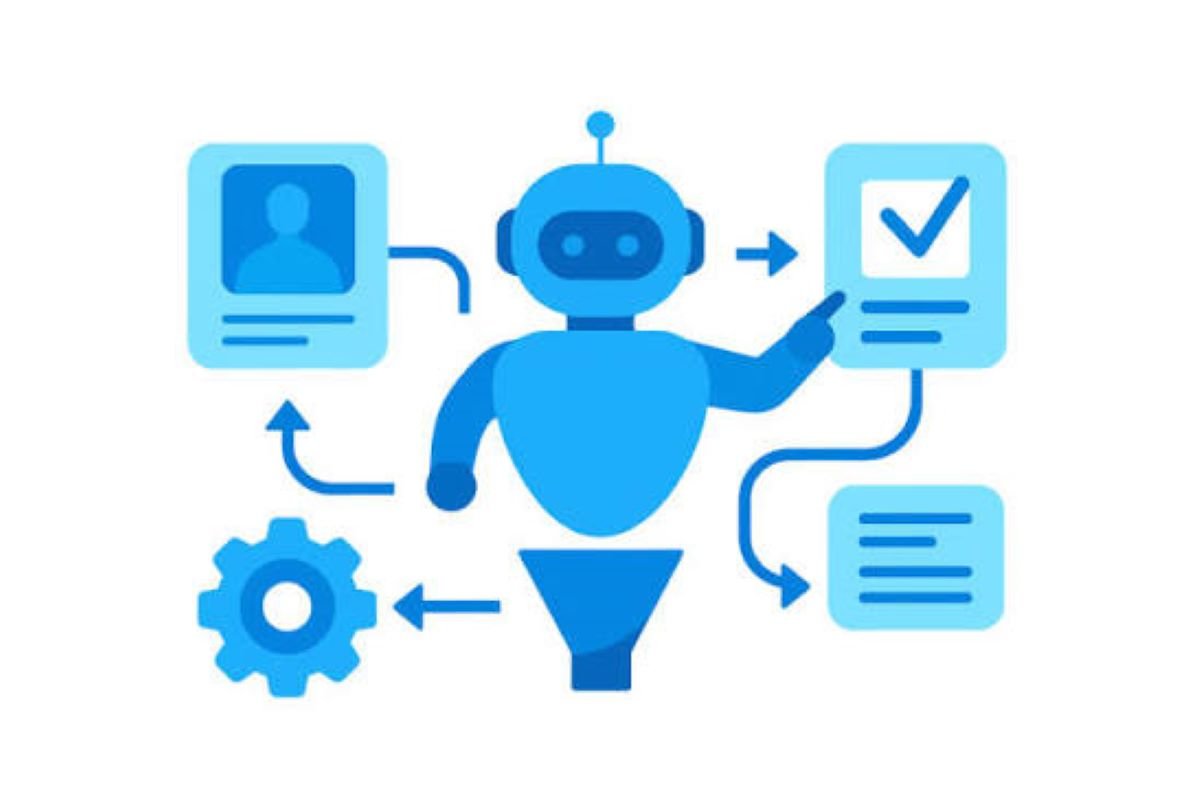
Hiring the right people is one of the biggest challenges for a growing startup. Small teams often have limited time, while founders and managers may need to handle job postings, applications, interviews, candidate communication, and onboarding at the same time.
AI can simplify this process. By using artificial intelligence for repetitive recruitment tasks, startups can automate hiring workflows, reduce administrative work, organize candidate information, and create a smoother hiring experience.
The goal is not to remove humans from recruitment. Instead, AI hiring automation helps teams spend less time on routine tasks and more time evaluating candidates and building strong teams.
What Is an AI-Powered Hiring Workflow?
An AI-powered hiring workflow uses artificial intelligence and automation tools to manage different stages of recruitment.
Must Read:No-code AI automation tools for non-technical founders
A typical automated hiring process may include:
- Creating and distributing job descriptions
- Collecting applications
- Organizing candidate information
- Screening resumes
- Identifying relevant skills
- Scheduling interviews
- Sending candidate updates
- Managing interview feedback
- Supporting employee onboarding
Instead of moving information manually between spreadsheets, emails, and calendars, automation connects these steps into a structured recruitment process.
Why Startups Should Automate Recruitment
Startups usually operate with limited resources. Hiring can consume significant amounts of time because recruiters or founders often perform repetitive administrative tasks.
AI recruitment automation can help solve this problem.
Save Time on Repetitive Tasks
Recruitment involves many repetitive activities. Reading applications, sending interview invitations, updating candidates, and arranging calendars can take hours.
AI tools can automate many of these tasks so hiring teams can concentrate on higher-value work.
Improve Candidate Organization
When applications arrive through different channels, keeping track of candidates can become difficult.
An automated hiring workflow can centralize candidate information and help recruiters move applicants through stages such as:
Applied → Screening → Interview → Assessment → Offer → Hired
This makes the recruitment pipeline easier to manage.
Speed Up Hiring Decisions
Slow communication can cause strong candidates to lose interest. Automated notifications, interview scheduling, and application updates can reduce unnecessary delays.
A faster workflow can also help startups fill important positions without spending weeks on administrative tasks.
How to Automate Hiring Workflow With AI
Building an AI hiring workflow does not require automating everything at once. Startups can begin with the most time-consuming recruitment tasks.
1. Create Better Job Descriptions
AI writing tools can help recruiters create structured job descriptions based on a specific role.
The system can organize responsibilities, required skills, qualifications, and expectations into an easy-to-read format.
However, human review is important. AI-generated job descriptions should be checked for accuracy, unnecessary requirements, and unclear language.
2. Automate Application Collection
A recruitment system can automatically collect applications from job boards, career pages, and other sources.
Candidate details can then be stored in an applicant tracking system rather than being manually copied into spreadsheets.
This creates a central database for managing the hiring pipeline.
3. Use AI for Resume Screening
AI-powered recruitment software can analyze resumes and identify information such as skills, experience, education, and relevant keywords.
Recruiters can use these tools to organize applicants and identify candidates who appear to match the predefined requirements.
AI screening should support human decision-making rather than make final hiring decisions without oversight.
4. Automate Interview Scheduling
Interview scheduling is another task that can easily be automated.
Candidates can receive a scheduling link and select an available time. Calendar integrations can then create the meeting automatically and send reminders.
This eliminates much of the back-and-forth communication between candidates and hiring teams.
5. Automate Candidate Communication
AI-powered recruitment platforms can send personalized messages throughout the hiring process.
For example, candidates can automatically receive:
- Application confirmations
- Interview invitations
- Interview reminders
- Status updates
- Requests for additional information
- Onboarding instructions
Consistent communication makes the recruitment process easier to manage.
AI Tools for Startup Hiring Automation
Startups can combine several types of software to create an automated hiring workflow.
An applicant tracking system (ATS) can organize candidate profiles and recruitment stages. AI recruitment software can assist with resume analysis and candidate matching. Scheduling platforms can manage interviews, while workflow automation tools can connect different applications.
A practical technology stack might look like:
Job Board → ATS → AI Screening → Scheduling Tool → Interview → Offer → Onboarding
The exact tools should depend on the startup’s hiring volume, budget, team size, and data requirements.
Best Practices for AI Recruitment Automation
Automation can improve recruitment, but poor implementation can create new problems.
Keep Humans in the Loop
Hiring decisions affect people’s careers. AI should assist recruiters rather than blindly determine who gets hired.
Human review is particularly important for shortlisted candidates, interviews, assessments, and final decisions.
Protect Candidate Data
Recruitment systems handle sensitive personal information. Startups should carefully evaluate how an AI tool stores, processes, and protects candidate data.
Access controls, appropriate retention policies, and secure integrations should be part of the implementation process.
Monitor for Unfair Outcomes
AI systems can produce problematic results if their data, configuration, or evaluation criteria create unintended biases.
Recruiters should regularly review screening criteria and outcomes to identify potential problems.
Final Thoughts
To automate hiring workflow with AI for startups, focus on repetitive processes rather than trying to replace the entire recruitment team.
AI can help startups organize applications, screen information, schedule interviews, automate communication, and streamline onboarding. These improvements can reduce administrative workload and give hiring teams more time to evaluate candidates properly.
The most effective approach is a balanced one: automate routine work, maintain human oversight, protect candidate information, and regularly review the results.
For startups, AI hiring automation is ultimately about building a faster, more organized, and scalable recruitment process without losing the human judgment that good hiring requires.



2 thoughts on “Automate Hiring Workflow With AI for Startups”