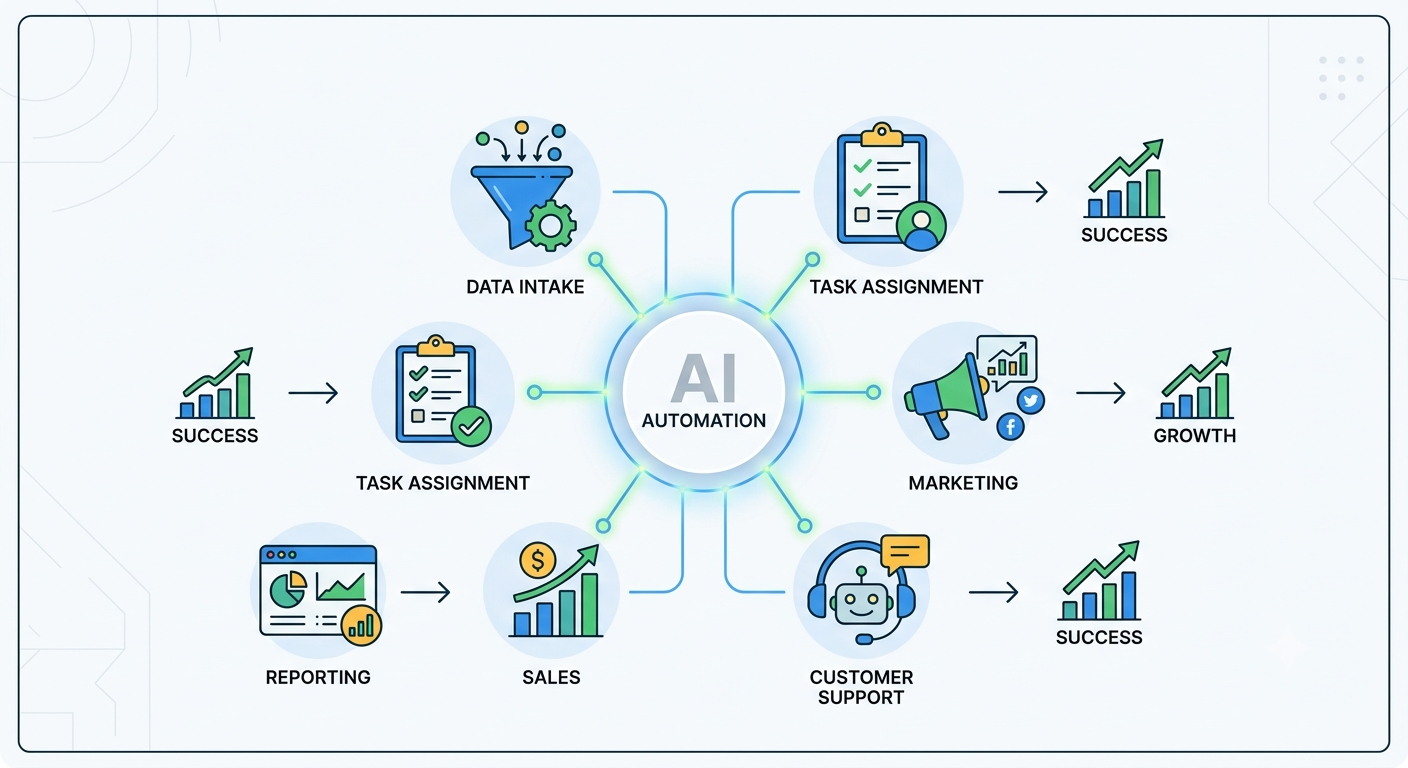
Startups thrive on speed, innovation, and adaptability, but limited resources often force small teams to manage a wide range of responsibilities. Repetitive administrative tasks can quickly consume valuable time, slowing growth and reducing productivity. Investing in AI workflow automation software for startups enables founders and teams to automate routine processes, streamline operations, and focus on scaling their businesses.
This guide explains how AI workflow automation software works, why it matters for startups, its key benefits, practical use cases, essential features, and tips for successful implementation.
What Is AI Workflow Automation Software?
AI workflow automation software uses artificial intelligence to automate repetitive business processes that typically require manual effort. Unlike traditional automation tools that follow fixed rules, AI-powered software can analyze data, recognize patterns, make intelligent recommendations, and improve performance over time.
These platforms integrate with business applications to automate tasks across departments, helping startups operate more efficiently with fewer resources.
Common AI technologies include:
- Machine Learning (ML)
- Natural Language Processing (NLP)
- Robotic Process Automation (RPA)
- Intelligent Document Processing (IDP)
- Optical Character Recognition (OCR)
- Predictive Analytics
Together, these technologies create intelligent workflows that reduce manual work while improving operational accuracy.
Why Startups Need AI Workflow Automation Software
Every startup faces challenges related to time, budget, and workforce limitations. Founders often handle marketing, customer support, finance, operations, and sales simultaneously.
AI workflow automation helps startups by:
- Eliminating repetitive manual tasks
- Increasing employee productivity
- Reducing operational costs
- Improving customer response times
- Supporting faster business growth
- Minimizing human errors
- Enabling teams to focus on innovation
Instead of hiring additional staff for administrative work, startups can automate routine processes and allocate resources more effectively.
Key Benefits of AI Workflow Automation Software
Increased Productivity
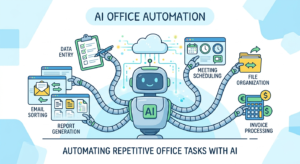
AI automates routine activities such as scheduling meetings, organizing emails, updating customer records, and processing documents. Employees can spend more time on strategic projects that contribute directly to business growth.
Reduced Operational Costs
Automation lowers the need for manual data entry and repetitive administrative work, helping startups achieve more with lean teams.
Improved Accuracy
AI consistently follows predefined workflows, reducing errors in data processing, reporting, invoicing, and document management.
Faster Decision-Making
AI analyzes large volumes of business data quickly, providing insights that help founders make informed decisions with greater confidence.
Enhanced Customer Experience
Automated support systems, personalized communication, and faster response times improve customer satisfaction and strengthen brand loyalty.
Essential Features of AI Workflow Automation Software
Intelligent Workflow Builder
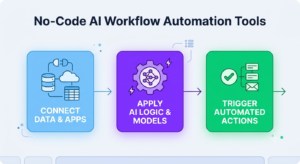
Modern platforms provide visual workflow builders that allow startups to automate processes without requiring advanced programming skills.
AI-Powered Decision Support
Artificial intelligence evaluates incoming data and automatically selects the most appropriate actions based on business rules.
Application Integrations
The best AI workflow automation software connects with:
- Customer Relationship Management (CRM) systems
- Accounting software
- Email platforms
- Project management tools
- Cloud storage services
- Communication applications
These integrations create seamless business operations across departments.
Document Automation
AI automatically extracts, categorizes, and stores information from invoices, contracts, forms, and reports, reducing manual paperwork.
Analytics Dashboard
Built-in reporting tools provide real-time insights into workflow performance, employee productivity, and operational efficiency.
Common Startup Workflows to Automate
Customer Support
AI-powered chatbots can:
- Answer frequently asked questions
- Route customer inquiries
- Create support tickets
- Provide instant assistance
- Collect customer information
This enables startups to deliver responsive customer service around the clock.
Marketing Automation
AI simplifies digital marketing by automating:
- Email campaigns
- Lead nurturing
- Customer segmentation
- Content recommendations
- Social media scheduling
- Campaign performance analysis
These automated workflows improve engagement while reducing manual effort.
Sales Operations
Sales teams can automate:
- Lead qualification
- CRM updates
- Proposal generation
- Follow-up reminders
- Appointment scheduling
- Sales forecasting
Automation allows sales professionals to spend more time building customer relationships.
Finance and Accounting
AI workflow automation software helps startups manage financial operations by automating:
- Invoice generation
- Expense tracking
- Payment reminders
- Financial reporting
- Receipt processing
- Budget monitoring
This improves financial accuracy while saving valuable administrative time.
Human Resources
Growing startups benefit from AI-powered HR workflows that automate:
- Resume screening
- Candidate communication
- Employee onboarding
- Leave management
- Performance tracking
- Training reminders
Automation creates a smoother employee experience from hiring through ongoing development.
How to Choose the Right AI Workflow Automation Software
Selecting the right platform requires careful evaluation of your startup’s current needs and future growth plans.
Consider the following factors:
Ease of Use
Choose software with an intuitive interface and drag-and-drop workflow creation to reduce the learning curve.
Scalability
Your automation platform should support increasing workloads as your startup expands.
Integration Capabilities
Ensure the software integrates with your existing business applications to eliminate data silos.
Security
Look for features such as:
- Data encryption
- Multi-factor authentication
- User access controls
- Compliance with privacy regulations
Protecting customer and business information should remain a top priority.
Reporting and Analytics
Performance dashboards help identify workflow bottlenecks and measure the return on investment from automation initiatives.
Best Practices for Successful Implementation
Start with High-Impact Tasks
Focus first on repetitive processes that consume the most employee time, such as email management, customer inquiries, or invoice processing.
Define Clear Objectives
Set measurable goals, including:
- Reducing processing time
- Increasing productivity
- Improving customer satisfaction
- Lowering operational costs
- Reducing manual errors
Clear objectives make it easier to evaluate success.
Train Your Team
Provide employees with practical training so they understand how automated workflows support their daily responsibilities.
Strong adoption leads to better results.
Monitor Performance
Track important metrics, including:
- Workflow completion time
- Automation success rate
- Customer response speed
- Employee productivity
- Cost savings
Continuous monitoring allows startups to optimize workflows over time.
Challenges Startups May Face
Although AI workflow automation offers substantial advantages, startups should prepare for several common challenges.
These include:
- Initial implementation costs
- Integration with legacy software
- Poor data quality
- Employee resistance to change
- Workflow redesign requirements
Starting with small automation projects helps reduce risk while demonstrating measurable business value.
Future Trends in AI Workflow Automation
The next generation of AI workflow automation software will become even more intelligent and accessible.
Emerging trends include:
- Generative AI for business content creation
- Autonomous AI agents capable of completing complex tasks
- Predictive workflow optimization
- AI-powered business assistants
- Hyperautomation across multiple business functions
- Advanced real-time business intelligence
These innovations will enable startups to operate with enterprise-level efficiency while maintaining lean organizational structures.
Conclusion
Adopting AI workflow automation software for startups is one of the most effective ways to improve efficiency, reduce operational costs, and accelerate business growth. By automating repetitive tasks across customer support, marketing, sales, finance, and human resources, startups can maximize productivity while allowing their teams to focus on innovation and strategic decision-making.
The key to success lies in selecting scalable software, automating high-impact workflows first, maintaining clean and secure data, and continuously refining processes based on performance insights. As AI technology continues to evolve, startups that embrace intelligent workflow automation will be better equipped to compete, scale efficiently, and build a strong foundation for long-term success.




One thought on “AI Workflow Automation Software for Startups: A Complete Guide to Smarter Business Operations”