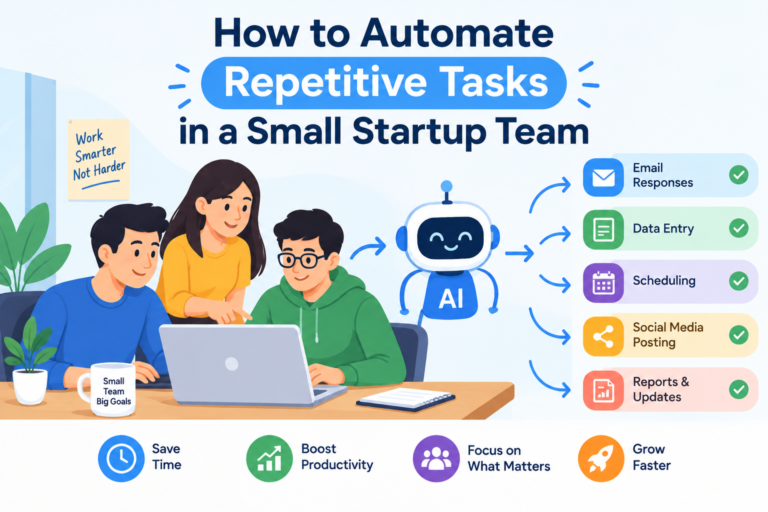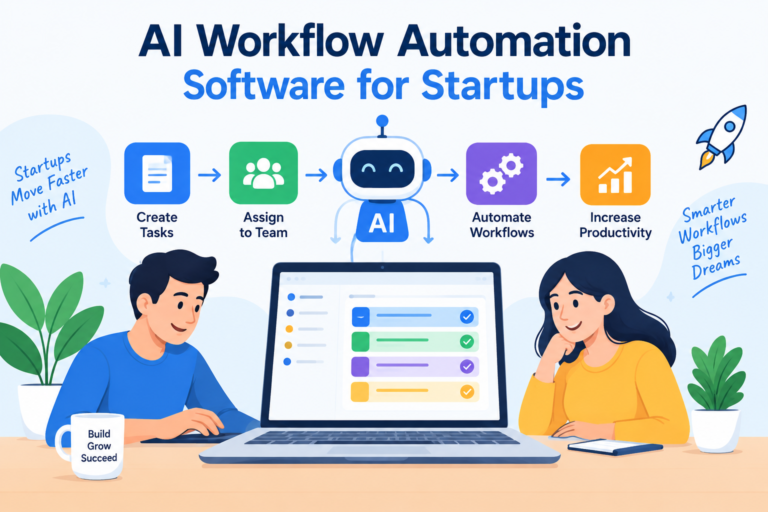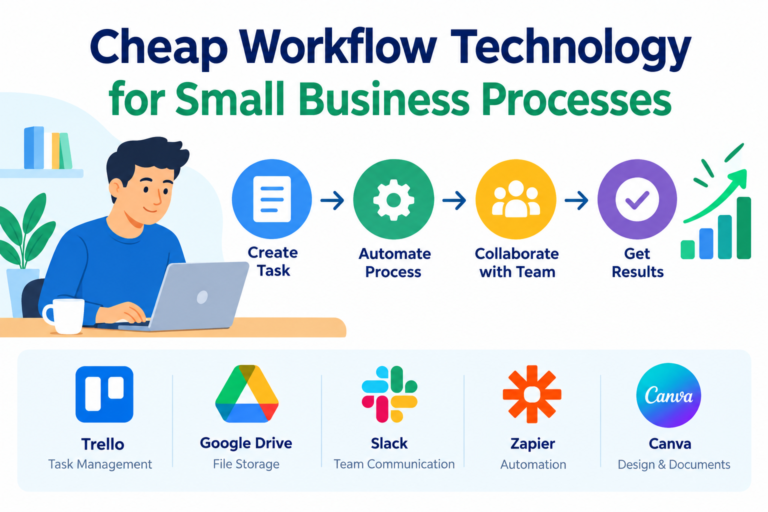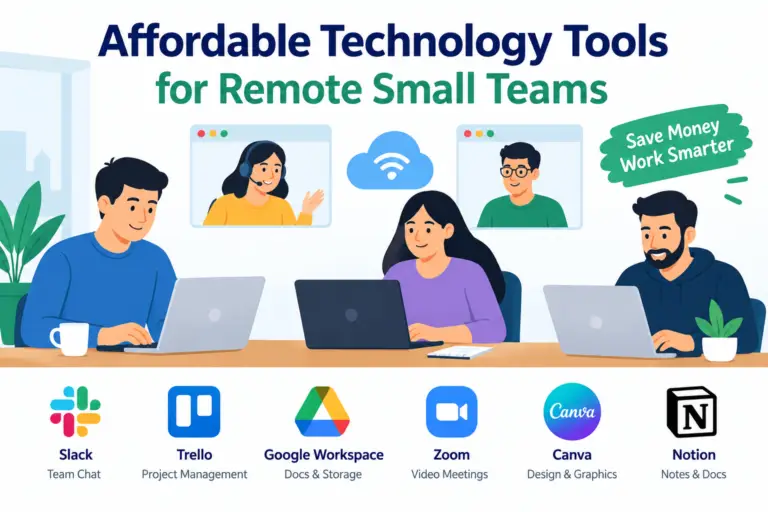
Small businesses often operate with limited budgets, lean teams, and growing workloads. Managing repetitive tasks manually can consume valuable time that could be spent on customer service, product development, or business expansion. AI workflow automation for small businesses offers a practical solution by automating routine processes, improving efficiency, and helping business owners focus on high-impact activities.
In this guide, you’ll learn what AI workflow automation is, its benefits, real-world applications, implementation strategies, and best practices for achieving long-term success.
What Is AI Workflow Automation for Small Businesses?
AI workflow automation refers to the use of artificial intelligence to automate repetitive business tasks that normally require human effort. Unlike traditional automation, AI can analyze data, recognize patterns, understand language, and make intelligent decisions based on predefined rules and historical information.
For small businesses, AI automation reduces manual work while increasing productivity across multiple departments.
Common AI technologies include:
- Machine Learning (ML)
- Natural Language Processing (NLP)
- Intelligent Document Processing (IDP)
- Robotic Process Automation (RPA)
- Predictive Analytics
- AI Chatbots
Together, these technologies create smarter workflows that save time and improve business performance.
Why Small Businesses Should Adopt AI Workflow Automation
Small business owners often wear multiple hats. Administrative work, customer communication, marketing, invoicing, and inventory management can quickly become overwhelming.
AI workflow automation helps by:
- Reducing repetitive manual tasks
- Improving operational efficiency
- Lowering business costs
- Increasing employee productivity
- Enhancing customer satisfaction
- Reducing human error
- Supporting business growth without expanding the workforce
Instead of spending hours on routine work, teams can focus on strategic planning and customer relationships.
Key Benefits of AI Workflow Automation
Save Valuable Time
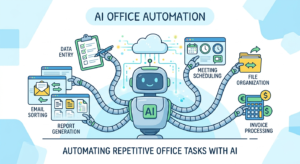
Many daily activities such as responding to emails, organizing files, scheduling meetings, and processing invoices can be completed automatically.
This allows employees to dedicate more time to creative and revenue-generating tasks.
Improve Accuracy
Manual data entry often leads to costly mistakes.
AI-powered automation follows predefined rules while continuously learning from data, significantly reducing processing errors.
Reduce Operational Costs
Automation minimizes labor-intensive tasks, helping businesses reduce administrative expenses without sacrificing quality.
Deliver Better Customer Service
AI chatbots and automated customer support systems answer common questions instantly, improving response times and customer satisfaction.
Support Business Growth
As your business expands, AI workflows scale easily without requiring additional staff for every new task.
Common AI Workflow Automation Use Cases
Customer Support
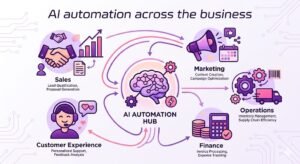
AI chatbots provide instant responses to frequently asked questions, book appointments, and route complex issues to human agents.
Benefits include:
- 24/7 customer assistance
- Faster response times
- Reduced support workload
- Improved customer experience
Email Management
AI automatically:
- Sorts incoming emails
- Prioritizes urgent messages
- Sends automated replies
- Creates follow-up reminders
This improves communication while reducing administrative work.
Marketing Automation
Small businesses can automate:
- Email marketing campaigns
- Lead nurturing
- Customer segmentation
- Social media scheduling
- Personalized product recommendations
AI also analyzes campaign performance to improve future marketing decisions.
Sales Automation
Sales teams use AI to:
- Qualify leads
- Schedule follow-ups
- Update CRM records
- Generate quotations
- Forecast sales opportunities
These workflows help increase conversion rates while reducing manual effort.
Accounting and Finance
AI simplifies financial operations by automating:
- Invoice generation
- Expense tracking
- Payment reminders
- Financial reporting
- Transaction categorization
This reduces bookkeeping time while improving financial accuracy.
Inventory Management
Retail businesses use AI to monitor inventory levels, predict demand, and automatically reorder products before stock runs low.
This helps prevent both overstocking and stock shortages.
Industries That Benefit Most
AI workflow automation is useful across many industries, including:
Retail
Retail businesses automate inventory management, customer support, promotions, and order processing.
Healthcare
Medical clinics automate appointment scheduling, patient communication, and document management.
Real Estate
Real estate agencies automate lead management, property inquiries, and client follow-ups.
Professional Services
Law firms, accounting firms, and consulting agencies automate documentation, scheduling, and client onboarding.
E-commerce
Online stores automate order processing, customer support, shipping notifications, and product recommendations.
How to Implement AI Workflow Automation
Identify Repetitive Tasks
Start by reviewing daily operations.
Look for activities that consume significant employee time, such as:
- Data entry
- Customer inquiries
- Invoice processing
- Email management
- Appointment scheduling
These tasks are excellent candidates for automation.
Set Business Goals
Define measurable objectives before implementation.
Examples include:
- Reduce processing time by 40%
- Improve customer response speed
- Lower operational costs
- Increase sales productivity
- Improve workflow accuracy
Clear goals help measure success.
Select the Right AI Automation Platform
Choose a solution that integrates with your current business software.
Consider features like:
- Easy setup
- Cloud accessibility
- CRM integration
- Workflow customization
- Data security
- Analytics dashboards
Selecting scalable software ensures long-term value.
Test Before Full Deployment
Begin with one workflow instead of automating every business process at once.
Testing allows you to identify issues and optimize workflows before expanding automation.
Monitor and Improve
AI systems improve over time, but regular monitoring remains essential.
Track key performance indicators such as:
- Workflow completion time
- Error rates
- Customer satisfaction
- Employee productivity
- Cost savings
Continuous optimization delivers better long-term results.
Best Practices for Small Businesses
Start Small
Automate one department first before expanding across the organization.
Train Employees
Help your team understand how AI supports their work instead of replacing it.
Employee adoption is critical for success.
Maintain Clean Data
AI performs best when working with organized, accurate information.
Poor-quality data reduces automation accuracy.
Keep Human Oversight
Not every business decision should be fully automated.
Review important financial, legal, and customer-facing processes regularly.
Focus on Customer Experience
Automation should make customer interactions faster, easier, and more personalized rather than less human.
Challenges to Consider
While AI automation offers significant advantages, small businesses should prepare for potential challenges.
Common obstacles include:
- Initial implementation costs
- Integration with older software
- Employee resistance to change
- Data privacy concerns
- Learning new automation platforms
A phased implementation strategy helps reduce these challenges while improving adoption.
The Future of AI Workflow Automation for Small Businesses
Artificial intelligence continues to evolve rapidly. Future innovations are expected to include:
- AI-powered business assistants
- Predictive workflow optimization
- Autonomous AI agents
- Voice-controlled business automation
- Hyperautomation across multiple departments
- Smarter business intelligence and analytics
As these technologies become more affordable, even micro-businesses will benefit from enterprise-level automation capabilities.
Conclusion
AI workflow automation for small businesses is no longer a luxury—it has become a practical strategy for improving efficiency, reducing costs, and supporting sustainable growth. By automating repetitive tasks in customer service, marketing, finance, sales, and operations, small businesses can save valuable time while delivering better experiences to customers.
The key to successful implementation is starting with simple workflows, selecting scalable AI tools, maintaining high-quality data, and continuously monitoring performance. Businesses that embrace intelligent automation today will be better equipped to compete, innovate, and grow in an increasingly digital economy.