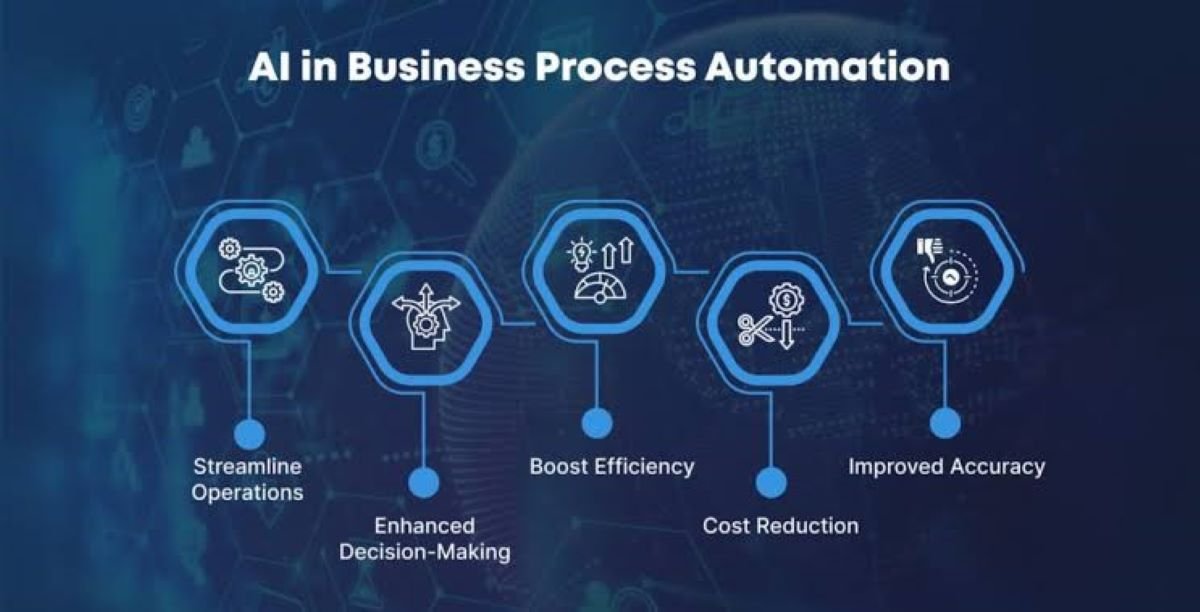
Businesses are constantly looking for ways to reduce repetitive work, improve efficiency, and make better use of their resources. Traditional automation can solve many problems, but it often requires technical knowledge, predefined rules, and significant setup time. AI-generated business process automation takes a different approach by using artificial intelligence to understand business tasks, create workflows, and automate processes with less manual configuration.AI-Native No-Code Workflow Automation
Instead of building every automation step from scratch, businesses can describe what they want to accomplish in natural language. AI can then help transform that description into a structured workflow. This makes automation more accessible to small businesses, startups, and teams without dedicated developers.
What Is AI-Generated Business Process Automation?
AI-generated business process automation refers to the use of artificial intelligence to design, configure, and execute automated business workflows.
Traditional automation generally follows fixed instructions. For example, when a customer submits a form, the system may automatically send an email. AI-powered automation can go further by understanding information, making decisions, generating content, and adapting actions based on context.
An AI automation system may analyze a business process and identify which activities can be automated. It can then connect different applications, establish conditions, and create a workflow that performs those tasks automatically.
This approach combines AI workflow automation, process management, machine learning, and business applications into a more intelligent automation environment.
How AI-Generated Automation Works
The process usually begins with a simple description of a business requirement.
For example, a company could describe a process like:
“When a new customer submits an inquiry, collect their information, determine their requirements, send an appropriate response, notify the sales team, and create a follow-up task.”
An AI-powered automation platform can interpret these instructions and translate them into workflow steps.
Understanding Business Requirements
AI first identifies the key components of the process. These can include triggers, actions, conditions, data sources, employees, customers, and required applications.
This allows the system to understand not only what should happen but also when and why an action needs to occur.
Creating Workflow Logic
After understanding the requirement, AI can generate workflow logic. The workflow might include conditional decisions, notifications, data transfers, approvals, and follow-up actions.
This significantly reduces the amount of manual configuration required.
Connecting Business Applications
Modern businesses rely on multiple applications for customer relationship management, communication, accounting, project management, marketing, and data storage.
AI-generated automation can help connect these systems so information moves between them without unnecessary manual entry.
Benefits of AI-Generated Business Process Automation
The biggest advantage is not simply saving time. Intelligent automation can change how employees spend their working hours.
Reduced Repetitive Work
Employees often spend significant amounts of time performing repetitive activities such as copying information, updating records, sending routine emails, and creating reports.
AI business process automation can handle many of these tasks automatically, allowing employees to focus on activities that require judgment and creativity.
Faster Business Operations
Manual processes can create delays between departments and customers. Automated workflows can execute routine actions immediately when predefined conditions are met.
For example, a customer request can automatically move from a website form to a CRM system and then trigger an internal notification.
Fewer Human Errors
Manual data entry and repetitive processes can lead to mistakes. Automation reduces the number of times employees need to enter or transfer information manually.
When properly configured and monitored, AI-powered workflows can improve consistency across business operations.
Lower Operational Costs
Automation can help businesses handle more work without increasing administrative workload at the same rate.
Small companies can particularly benefit because they can automate repetitive processes without building large technical teams.
Common Use Cases
AI-generated business process automation can be applied across many departments.
Customer Service
AI can classify customer requests, identify common questions, generate responses, route complex issues, and update customer records.
This can make support operations faster while allowing human agents to concentrate on difficult cases.
Sales and Lead Management
AI automation can organize incoming leads, enrich customer information, assign prospects to sales representatives, and schedule follow-up activities.
Automated lead workflows can also help ensure that potential customers do not get forgotten after their first interaction.
Marketing Operations
Marketing teams can automate content workflows, campaign notifications, audience segmentation, reporting, and lead nurturing.
AI can also assist with analyzing campaign information and identifying patterns that require attention.
Finance and Administration
Businesses can automate invoice processing, approval workflows, expense reporting, payment reminders, and financial document organization.
These workflows can reduce administrative workload and improve process visibility.
Employee Onboarding
When a new employee joins a company, several tasks may need to be completed. These can include account creation, document collection, training assignments, and internal notifications.
An automated onboarding workflow can coordinate these activities and ensure that important steps are not missed.
AI Automation vs. Traditional Business Automation
Traditional automation usually depends on clearly defined rules. If condition A occurs, perform action B.
AI-powered automation introduces greater flexibility. Artificial intelligence can interpret unstructured information, understand natural language, classify data, generate content, and support decisions.
However, AI is not automatically better for every process.
Simple, predictable tasks may be better handled by conventional rule-based automation. AI becomes particularly useful when workflows involve documents, language, changing information, or decisions that require contextual understanding.
The smartest strategy is often a combination of AI automation and traditional workflow automation.
Challenges to Consider
AI-generated automation also comes with risks.
Businesses need to consider data privacy, security, system reliability, integration limitations, and inaccurate AI outputs. Critical workflows should not operate without appropriate monitoring simply because they are automated.
Human oversight remains important for sensitive decisions, financial operations, legal processes, and customer-impacting activities.
Companies should begin with well-defined processes, test workflows carefully, and establish clear approval points where human intervention is necessary.
The Future of AI-Generated Business Automation
The future of business automation is moving toward systems that can understand goals rather than simply execute fixed instructions.
Instead of manually creating every workflow, employees may increasingly describe a desired outcome in natural language and allow AI to build the initial automation.
This could make AI-generated workflows, no-code automation, and intelligent process management accessible to a much wider range of businesses.
The organizations that benefit most will not be those that automate everything. They will be the ones that identify the right processes, combine AI with human expertise, and continuously improve their workflows.
Conclusion
AI-generated business process automation offers a practical way for modern organizations to simplify operations, reduce repetitive work, and improve productivity. By using artificial intelligence to understand requirements and generate workflow logic, businesses can create automation with less technical effort.
From customer service and sales to finance, marketing, and employee onboarding, the potential applications are broad. But successful automation requires more than adopting an AI tool. Businesses need clear processes, reliable data, appropriate safeguards, and human oversight.
Used strategically, AI-powered business automation can become more than a productivity tool. It can serve as a foundation for faster, more scalable, and more efficient business operations.






One thought on “AI-Generated Business Process Automation: A Smarter Way to Run Modern Businesses”