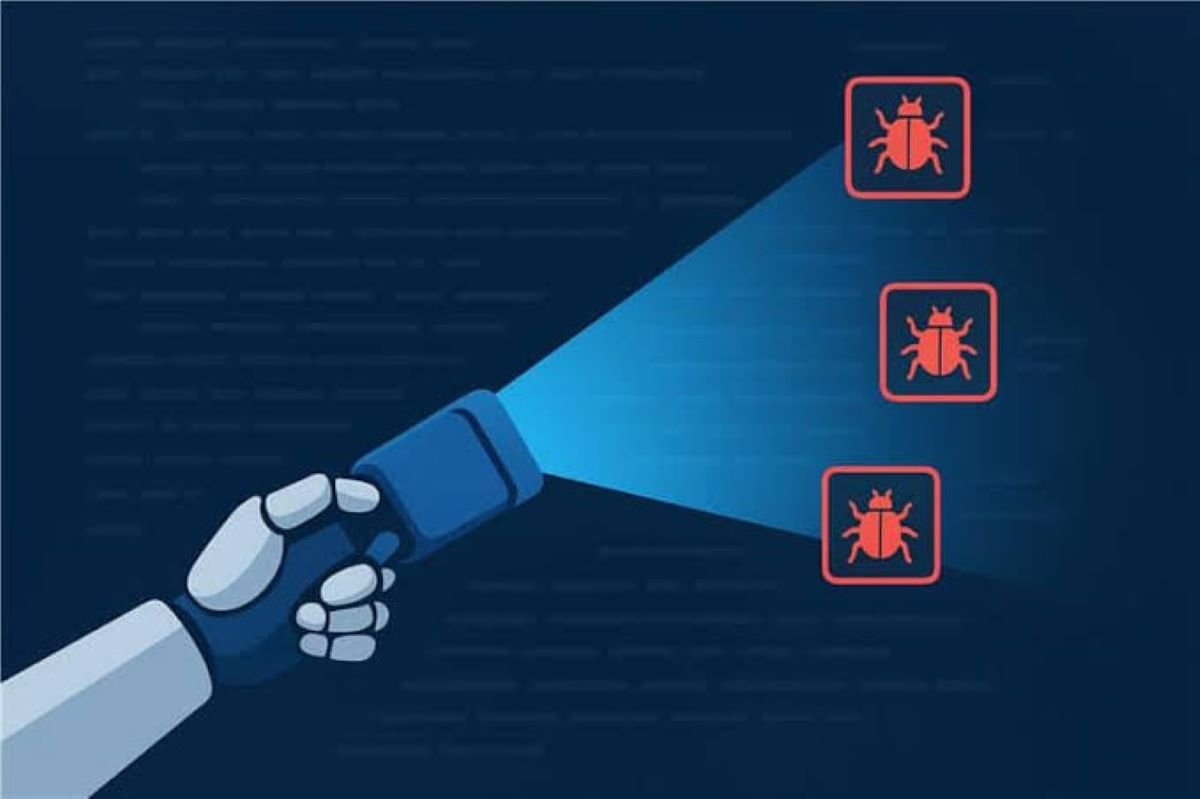
Software applications are becoming more complex, while development teams are expected to release updates faster than ever. Finding bugs quickly is therefore critical for maintaining performance, security, reliability, and user satisfaction.
Traditional debugging and manual testing remain valuable, but they can become difficult to scale. AI bug detection introduces artificial intelligence and machine learning into the software quality process, helping development teams identify potential defects, analyze failures, and prioritize areas that require attention.
From web applications and mobile apps to APIs and cloud platforms, AI-powered bug detection can make the software development lifecycle more efficient.
What Is AI Bug Detection?
AI bug detection is the use of artificial intelligence, machine learning, pattern recognition, and automated analysis to identify potential software defects.
Traditional bug detection often depends on predefined test cases and manually reviewed results. AI-based systems can analyze much larger volumes of information, including source code, application behavior, logs, test results, and historical defect data.
The goal is not simply to find more bugs. AI can also help teams understand patterns behind failures and determine which issues may require immediate investigation.
How AI Bug Detection Works
AI bug detection can use several techniques depending on the software environment and available data.Ultimate Guide to AI Development Tools
Machine Learning for Defect Identification
Machine learning models can examine historical development and testing data to recognize patterns associated with software defects.
For example, if certain types of code changes have historically resulted in failures, an AI system may identify similar changes in a new release and flag them for additional testing.
This approach can support proactive software quality management.
Static Code Analysis
AI-powered static analysis examines source code without necessarily executing the application.
The system can search for suspicious coding patterns, potential logic errors, duplicated code, insecure practices, and other issues.
Traditional static analysis tools generally rely on predefined rules. AI can complement these rules by identifying patterns that may not have been explicitly programmed into the detection system.
Runtime Error Detection
Some bugs only appear when software is running.
AI systems can analyze application logs, crashes, exceptions, performance metrics, and user behavior to identify unusual activity.
For example, an AI monitoring system might detect that a particular API begins producing abnormal error rates after a software deployment.
Key Benefits of AI Bug Detection
AI-powered defect detection can provide several benefits when implemented correctly.
Faster Bug Identification
Automated systems can continuously analyze software and testing information. This allows potential issues to be detected without waiting for a manual testing cycle to finish.
Earlier detection gives developers more opportunities to fix problems before they reach production.
Improved Software Quality
AI can analyze different sources of information simultaneously. This may include code changes, test results, logs, historical defects, and application performance.
Combining these signals can provide QA teams with additional information when investigating software problems.
Reduced Manual Effort
Software teams often spend significant time reviewing test failures and large volumes of logs.
AI can help filter information and highlight potentially important anomalies. This allows developers and testers to spend more time investigating meaningful problems instead of manually reviewing every result.
Better Defect Prioritization
Not every bug has the same impact.
A minor visual issue and a payment-processing failure should not necessarily receive the same priority.
AI-powered defect management can analyze factors such as frequency, affected functionality, previous incidents, and application behavior to help teams organize issues more effectively.
AI Bug Detection in Software Testing
AI bug detection works particularly well alongside automated software testing.
Automated Regression Testing
Regression testing verifies that existing functionality continues to work after changes are made.
AI can analyze recent code changes and testing history to help identify areas that may require additional regression coverage.
This can be useful for large applications where running every possible test after every change is expensive or time-consuming.
Intelligent Test Analysis
Automated testing can generate thousands of results. Reviewing all of them manually can be difficult.
AI-based test analytics can group similar failures, identify recurring patterns, and help distinguish potentially meaningful failures from repeated or related errors.
This can reduce noise in large testing environments.
AI Bug Detection for Web and Mobile Apps
Modern applications operate across browsers, devices, operating systems, and network conditions.
Web Application Bugs
For websites and web applications, AI can help detect unexpected interface changes, broken workflows, JavaScript errors, API failures, and unusual user behavior.
Visual analysis can also assist with identifying changes in page layouts and interface components.
Mobile Application Bugs
Mobile software introduces additional variables such as device hardware, screen sizes, operating system versions, and connectivity conditions.
AI-powered testing can analyze behavior across multiple environments and help identify patterns that may indicate device-specific problems.
AI-Powered Anomaly Detection
One important application of AI bug detection is anomaly detection.
Instead of searching only for predefined errors, an AI system can learn what normal application behavior looks like.
When the system observes unusual behavior, it can generate an alert for further investigation.
For example, an application normally processes API requests within a certain range. If response times suddenly increase after a deployment, an AI monitoring system may identify the change as an anomaly.
An anomaly does not automatically mean there is a bug. Human investigation is still required to determine the cause.
Challenges of AI Bug Detection
AI bug detection is powerful, but it has limitations.
AI models depend on the quality of the data they receive. Incomplete, inconsistent, or biased historical data can reduce the usefulness of predictions.
False positives are another challenge. An AI system may flag normal behavior as suspicious, creating additional work for development teams.
There is also the risk of overlooking defects that do not resemble patterns found in previous data.
Human Expertise Remains Important
AI should support software engineers and QA professionals rather than completely replace them.
Human testers are better positioned to understand business requirements, user expectations, unusual workflows, and complex application behavior.
The most effective approach combines automated analysis with human judgment.
Best Practices for Using AI Bug Detection
Organizations can improve results by introducing AI gradually.
Start with a specific problem, such as analyzing production errors or prioritizing regression tests. Establish measurable objectives before expanding the system.
Teams should also monitor false positives, detection accuracy, and the time required to investigate AI-generated alerts.
AI findings should be treated as signals for investigation rather than unquestionable conclusions.
The Future of AI Bug Detection
The role of artificial intelligence in software quality is likely to expand as development environments become more automated.
Future AI systems may become better at understanding code relationships, identifying complex defect patterns, generating targeted tests, and explaining potential causes of failures.
Generative AI may also make it easier for developers to describe a problem in natural language and receive possible debugging paths or test scenarios.
However, reliable software will still require engineering expertise, testing discipline, and human oversight.
Conclusion
AI bug detection provides software teams with a smarter way to analyze code, testing results, application behavior, and production data. By identifying unusual patterns and potential defects earlier, AI can support faster debugging and more efficient quality assurance.
Its greatest value comes from combining machine intelligence with human expertise. AI can process large amounts of technical information quickly, while experienced developers and testers provide the context needed to determine whether an issue is real, important, and worth fixing.
For modern software teams, AI bug detection can become a valuable component of a broader automated testing and continuous quality strategy.






One thought on “AI Bug Detection: How Artificial Intelligence Is Transforming Software Quality”