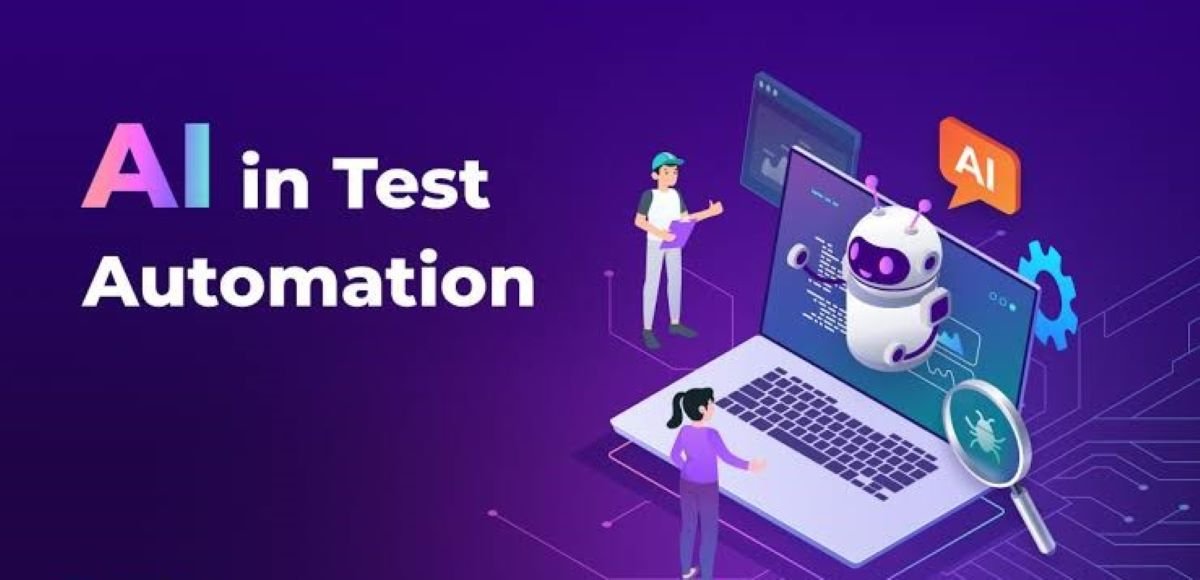
Software development is moving faster than ever. Teams release new features frequently, manage complex applications, and support users across multiple platforms. Traditional software testing can struggle to keep up with this pace. This is where AI testing automation is becoming an important part of modern quality assurance.
AI-powered testing combines artificial intelligence, machine learning, automation, and intelligent data analysis to make software testing faster and more adaptive. Instead of relying entirely on manually written test cases, teams can use AI to identify potential issues, generate tests, analyze results, and maintain automation workflows.
What Is AI Testing Automation?
AI testing automation refers to the use of artificial intelligence technologies to automate and improve software testing activities.Ultimate Guide to AI Development Tools
Traditional test automation follows predefined instructions. For example, a test might open an application, enter information into a form, click a button, and verify the expected result.
AI testing tools can go further. They can analyze application behavior, recognize patterns, identify changes, generate test scenarios, and help testers determine which areas require attention.
This approach can support web applications, mobile apps, APIs, enterprise software, and cloud-based platforms.
How AI Testing Automation Works
AI-powered testing typically combines several technologies and processes.
Intelligent Test Case Generation
Creating comprehensive test cases can take considerable time. AI can analyze application requirements, user flows, existing tests, and historical defect information to suggest relevant test scenarios.
For example, an AI testing system may identify important checkout workflows in an ecommerce application and recommend tests for successful payments, failed transactions, invalid discount codes, and interrupted sessions.
This helps QA teams expand test coverage without manually creating every scenario.
Automated Test Execution
Once test cases are available, automation frameworks can execute them repeatedly across different environments.
AI can help prioritize tests based on recent code changes, previous failures, application risk, and usage patterns. Instead of running every test after every small update, teams can focus resources on areas most likely to be affected.
Intelligent Test Maintenance
One of the biggest challenges with test automation is maintenance.
A small change in a website’s interface can cause automated tests to fail even when the underlying functionality still works. AI-powered testing systems can use visual recognition and contextual analysis to understand interface changes and identify alternative elements.
This can reduce unnecessary test failures and lower the maintenance workload for QA engineers.
Key Benefits of AI Testing Automation
AI testing automation offers several potential advantages for software development teams.
Faster Software Testing
Automated systems can execute large numbers of tests much faster than manual testing. This is especially useful for applications that require frequent releases.
Faster testing can help development teams identify problems earlier in the software development lifecycle.
Improved Test Coverage
Manual testing is limited by available time and resources. Automated systems can test multiple workflows, configurations, devices, and environments.
AI can also identify unusual combinations that testers may not immediately consider.
Early Bug Detection
Finding defects earlier can reduce the cost and complexity of fixing them.
AI testing tools can analyze test results and historical information to identify patterns associated with potential failures. This gives developers additional information when investigating software problems.
Reduced Repetitive Work
QA professionals often spend significant time performing repetitive tests, reviewing results, and maintaining test scripts.
Automating these activities allows testers to spend more time on exploratory testing, usability evaluation, security considerations, and other tasks requiring human judgment.
AI-Powered Test Analytics
Testing generates large amounts of information. A modern application may produce thousands of test results during a single development cycle.
AI can help analyze this information and identify meaningful patterns.
For example, an intelligent testing platform might identify that failures frequently occur after a particular API change or that a specific feature has an unusually high defect rate.
Predictive Defect Analysis
Machine learning models can use historical testing and development data to identify areas that may have a higher probability of defects.
This does not guarantee that a predicted problem exists. Instead, it provides an additional signal that can help teams prioritize investigation.
AI Testing for Different Applications
AI testing automation can be applied across different software environments.
Web Application Testing
AI can assist with functional testing, user interface validation, regression testing, and cross-browser testing for websites and web applications.
Visual testing capabilities can also help detect unexpected changes in layouts, buttons, forms, and other interface elements.
Mobile Application Testing
Mobile applications must operate across different devices, operating systems, screen sizes, and network conditions.
AI-based automation can help organizations test these combinations more efficiently.
API Testing
APIs are essential components of modern applications. AI automation can help generate API test scenarios, validate responses, identify unusual behavior, and analyze failures.
This can be particularly useful for applications that depend on multiple interconnected services.
AI Testing Automation and DevOps
AI testing becomes especially valuable when integrated with DevOps and CI/CD pipelines.
Automated tests can run whenever developers submit code changes. AI can help determine which tests should receive priority and analyze failures after execution.
This creates a continuous feedback loop between development and quality assurance.
When properly implemented, AI-powered testing can contribute to faster releases without removing quality controls.
Challenges of AI Testing Automation
Despite its advantages, AI testing automation is not a complete replacement for human testers.
AI systems can produce incorrect assumptions, miss unusual usability problems, or misunderstand business requirements. Poor-quality training data can also affect automated analysis.
There are also implementation costs. Organizations need suitable testing infrastructure, reliable test data, integration with existing development tools, and employees who understand both software testing and AI technologies.
Human Testing Still Matters
Human testers remain important for exploratory testing, user experience evaluation, business logic validation, and investigating complex problems.
The most practical approach is often a combination of AI test automation and human expertise rather than complete dependence on automation.
Best Practices for Implementing AI Testing
Organizations planning to introduce AI testing should start with clearly defined objectives.
Begin with repetitive, high-value testing activities rather than attempting to automate everything at once.
Maintain clean and reliable test data, monitor automated results, and regularly review AI-generated test cases.
Teams should also measure meaningful outcomes such as test coverage, defect detection, execution time, false-positive rates, and maintenance effort.
The Future of AI Testing Automation
AI testing automation is likely to become increasingly integrated into modern software development. Advances in machine learning, generative AI, intelligent test generation, visual recognition, and predictive analytics are creating new possibilities for quality assurance.
Future testing systems may become more capable of understanding application behavior, generating complex test scenarios, identifying risky code changes, and explaining why a test failed.
However, successful software quality will still depend on human decision-making. AI can process large amounts of information quickly, but experienced testers provide context, creativity, and critical judgment.
Conclusion
AI testing automation is changing how software teams approach quality assurance. From automated test generation and execution to intelligent test maintenance and predictive analytics, AI can reduce repetitive work while helping teams achieve broader testing coverage.
The strongest strategy is not to replace testers with AI. Instead, organizations can use AI to handle repetitive and data-intensive tasks while allowing QA professionals to focus on complex testing, user experience, and strategic quality decisions.
For teams developing modern software at high speed, combining AI-powered testing with established automation practices can create a more efficient and responsive testing process.






One thought on “AI Testing Automation: A Smarter Approach to Modern Software Quality”