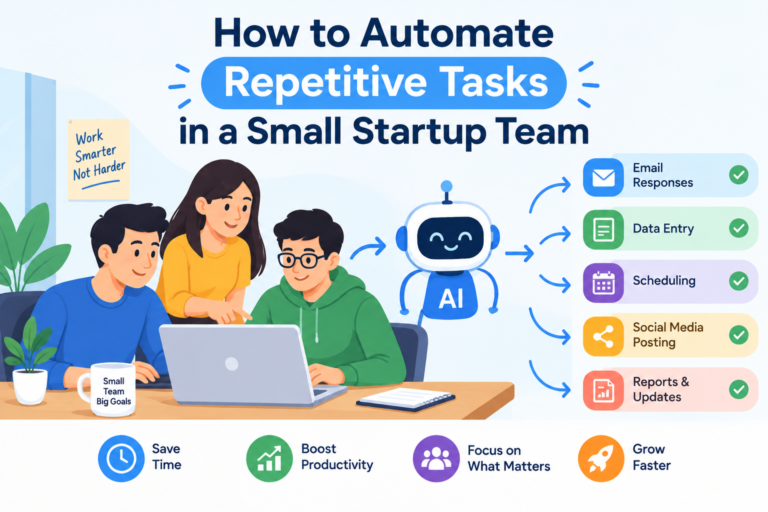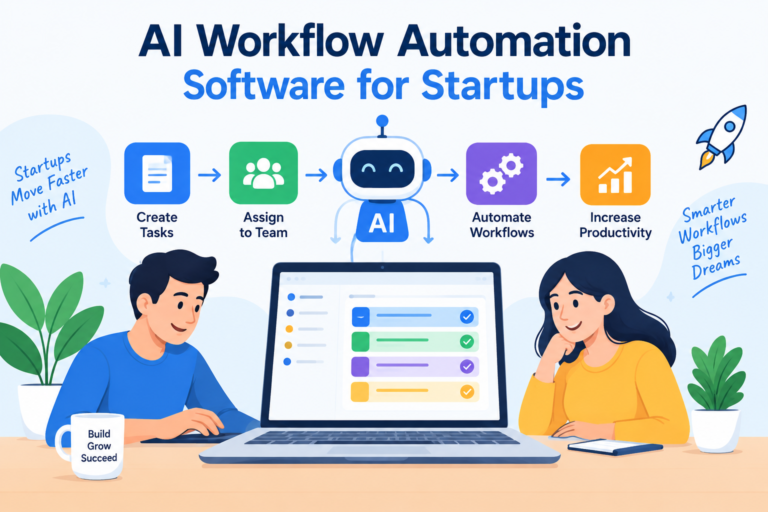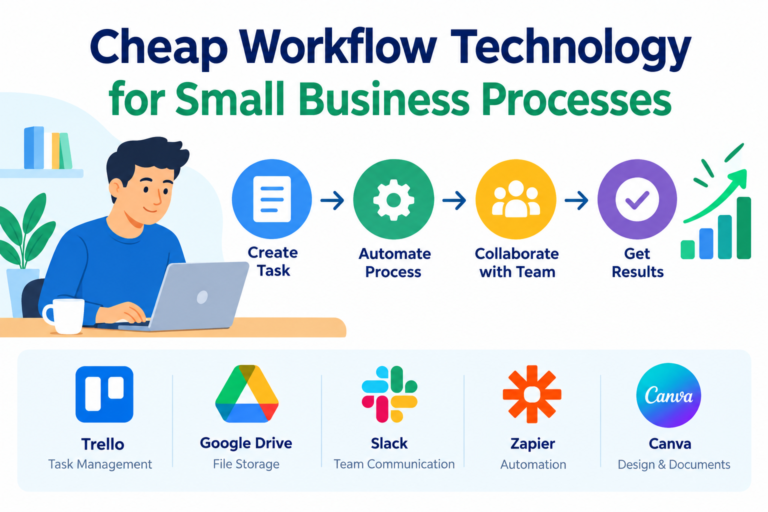
Businesses today are expected to deliver faster results while managing increasing workloads with limited resources. Manual processes often slow operations, create bottlenecks, and increase the risk of human error. This is why AI-powered task automation solutions have become an essential part of digital transformation strategies.
Unlike traditional automation that follows fixed rules, AI-powered automation can analyze information, recognize patterns, make intelligent decisions, and continuously improve over time. From handling administrative work to supporting customer service and data analysis, these solutions help organizations automate repetitive tasks while enabling employees to focus on strategic initiatives.
What Are AI-Powered Task Automation Solutions?
AI-powered task automation solutions are software platforms that use artificial intelligence to automate routine business activities with minimal human intervention. They combine technologies such as machine learning, natural language processing (NLP), computer vision, and predictive analytics to perform tasks that previously required manual effort.
These solutions can understand documents, process customer requests, generate reports, classify information, and even recommend actions based on historical data. As a result, businesses can improve productivity while maintaining high levels of accuracy.
Why Businesses Are Investing in AI Task Automation
Organizations across industries are adopting AI automation to improve efficiency and remain competitive.
Some of the most significant benefits include:
- Increased operational efficiency
- Reduced manual and repetitive work
- Faster business processes
- Improved accuracy and consistency
- Lower operational costs
- Enhanced employee productivity
- Better customer experiences
- Scalable business operations
By automating repetitive workflows, teams can dedicate more time to innovation, planning, and customer engagement.
Key Features of AI-Powered Task Automation Solutions
Intelligent Workflow Automation
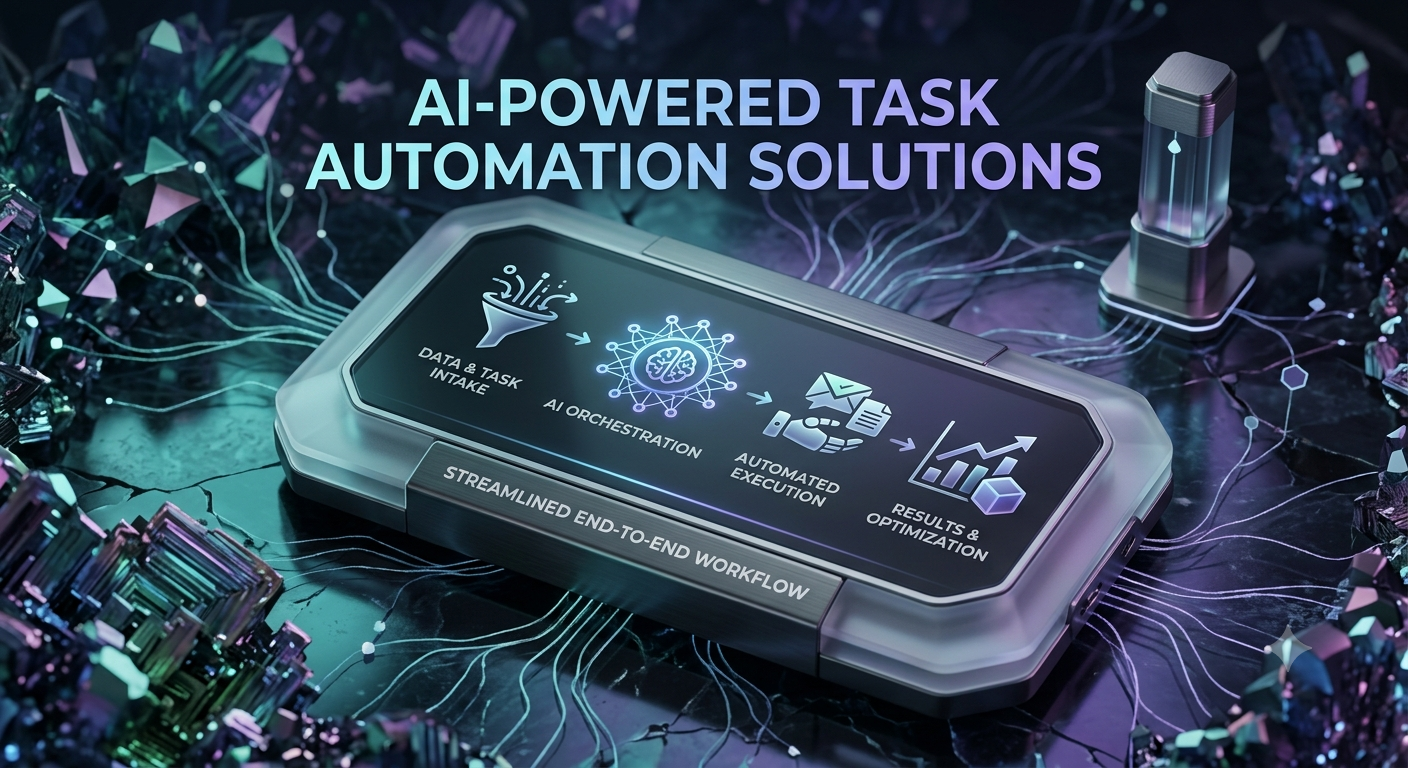
AI-powered platforms automate multi-step workflows by connecting business applications, triggering actions, and making decisions based on predefined conditions and real-time data.
Natural Language Processing
Natural language processing enables AI to understand written and spoken language. This allows automation tools to summarize documents, classify emails, answer customer questions, and generate business content.
Predictive Analytics
AI analyzes historical and real-time data to forecast trends, identify risks, and recommend the next best actions. Businesses can use these insights to improve planning and decision-making.
Smart Data Extraction
AI extracts structured information from invoices, contracts, forms, receipts, and other business documents without requiring manual data entry.
Real-Time Monitoring
Many automation platforms provide dashboards that monitor workflow performance, identify bottlenecks, and notify teams about exceptions or delays.
Common Applications of AI Task Automation
Customer Service
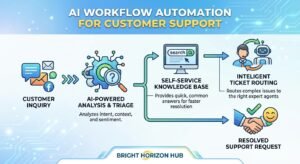
Customer support teams use AI to automate repetitive interactions while improving response times.
Typical tasks include:
- Answering frequently asked questions
- Routing support tickets
- Tracking customer requests
- Generating support summaries
- Providing self-service assistance
Human agents can then focus on resolving more complex customer issues.
Marketing Automation
Marketing professionals use AI-powered task automation solutions to streamline campaign management.
Common examples include:
- Email personalization
- Social media scheduling
- Content recommendations
- Lead scoring
- Campaign reporting
- Audience segmentation
Automation allows marketing teams to execute campaigns more efficiently while delivering personalized experiences.
Human Resources
HR departments automate administrative processes that traditionally consume significant time.
Examples include:
- Resume screening
- Interview scheduling
- Employee onboarding
- Document verification
- Training reminders
- Leave request management
These workflows improve employee experiences while reducing administrative workloads.
Finance and Accounting
Finance teams use AI automation to simplify routine financial operations.
Automated tasks include:
- Invoice processing
- Expense approvals
- Payment reconciliation
- Fraud detection
- Financial reporting
- Compliance monitoring
This improves accuracy and accelerates financial processes.
Sales Operations
Sales teams benefit from AI by automating lead management and customer relationship activities.
AI helps with:
- Lead qualification
- CRM updates
- Follow-up reminders
- Proposal generation
- Customer insights
- Sales forecasting
This enables sales professionals to spend more time building relationships and closing deals.
How AI Improves Traditional Task Automation
Traditional automation works well for repetitive tasks with fixed rules, but it cannot adapt to changing situations.
AI-powered automation introduces intelligent capabilities such as:
Context-Aware Decision Making
AI understands the context behind customer interactions, documents, and business processes, allowing it to make more informed decisions.
Continuous Learning
Machine learning models improve over time by analyzing new data and identifying patterns that enhance workflow performance.
Adaptive Automation
Instead of following rigid instructions, AI can adjust workflows based on changing conditions, customer behavior, or business priorities.
Best Practices for Implementing AI-Powered Task Automation
Identify High-Impact Tasks
Begin with repetitive, time-consuming processes that have clear rules and measurable outcomes.
Ensure High-Quality Data
Accurate and organized data improves AI performance and reduces automation errors.
Integrate Existing Business Systems
Choose solutions that integrate with your CRM, ERP, communication platforms, and cloud applications to create seamless workflows.
Train Employees
Successful AI adoption requires employees to understand how automation works and how it supports their daily responsibilities.
Monitor Performance Regularly
Review workflow performance, measure key performance indicators (KPIs), and refine automation rules to maximize long-term value.
Challenges to Consider
Although AI-powered task automation offers substantial benefits, businesses should prepare for several implementation challenges.
Potential considerations include:
- Data privacy and security
- Integration with legacy systems
- Employee training and change management
- Initial implementation costs
- Ongoing monitoring and optimization
Addressing these challenges early helps ensure a smooth transition to intelligent automation.
Future Trends in AI Task Automation
The future of AI-powered task automation is moving toward more autonomous and intelligent systems. Emerging innovations include AI agents capable of handling end-to-end workflows, predictive process optimization, conversational business assistants, and advanced decision intelligence.
Businesses will also see tighter integration between automation platforms, cloud services, and business intelligence tools, creating more connected and efficient digital ecosystems.
As AI technologies continue to evolve, task automation solutions will become more accessible, accurate, and capable of supporting increasingly complex business operations.
Conclusion
AI-powered task automation solutions are helping organizations transform the way they work by automating repetitive tasks, improving operational efficiency, and enabling smarter decision-making. Whether applied to customer service, marketing, human resources, finance, or sales, AI automation reduces manual effort while increasing productivity and accuracy.
Companies that adopt intelligent automation today are better positioned to scale operations, improve customer satisfaction, and adapt to the demands of an increasingly digital business environment. By combining AI with well-designed workflows and continuous optimization, organizations can unlock long-term efficiency, innovation, and sustainable growth.