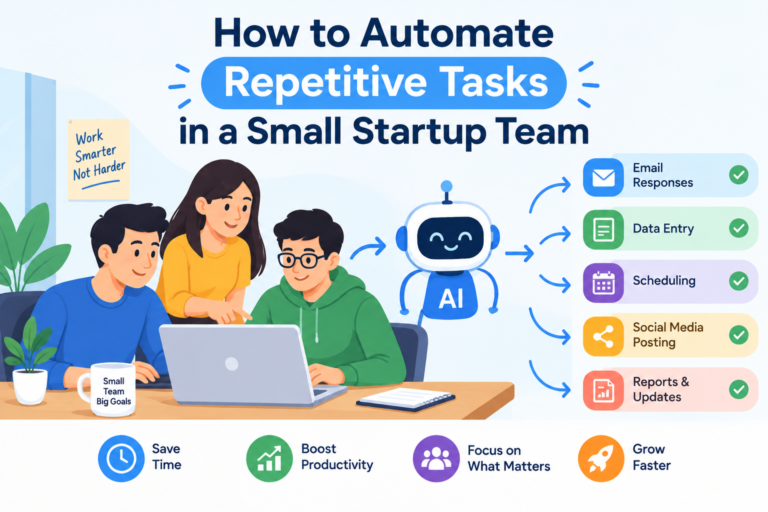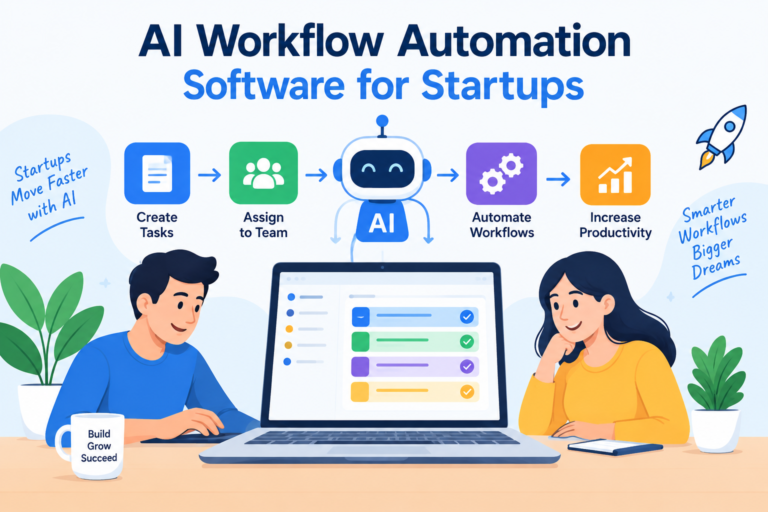
Artificial intelligence has become a driving force behind digital transformation, enabling enterprises to automate complex workflows, improve operational efficiency, and make data-driven decisions faster than ever before. As organizations manage growing volumes of data, customer interactions, and internal processes, AI workflow automation use cases for enterprises continue to expand across nearly every department.
Unlike traditional automation, AI-powered workflows can analyze information, recognize patterns, predict outcomes, and adapt to changing business conditions. This makes enterprise automation more intelligent, scalable, and capable of handling both routine and complex business operations.
In this guide, we’ll explore the most impactful AI workflow automation use cases, their benefits, and best practices for successful implementation.
What Is AI Workflow Automation?
AI workflow automation combines artificial intelligence, machine learning, natural language processing (NLP), and business process automation to streamline repetitive and decision-based tasks. Instead of relying solely on predefined rules, AI systems learn from historical data, identify trends, and continuously improve workflow performance.
Enterprise organizations use AI workflow automation to reduce manual work, eliminate bottlenecks, improve accuracy, and accelerate business processes across multiple departments.
Why Enterprises Are Investing in AI Workflow Automation
Large organizations often manage thousands of daily transactions, customer requests, and operational activities. Manual processing slows productivity and increases the risk of errors.
AI workflow automation helps enterprises:
- Improve operational efficiency
- Reduce administrative costs
- Enhance customer experiences
- Increase employee productivity
- Accelerate decision-making
- Minimize human error
- Scale business operations
- Strengthen compliance and governance
These benefits allow enterprises to remain competitive while supporting sustainable growth.
Top AI Workflow Automation Use Cases for Enterprises
Customer Support Automation
Customer service is one of the most common enterprise applications for AI workflow automation.
Intelligent Chatbots
AI-powered chatbots answer frequently asked questions, resolve common issues, and provide instant assistance 24/7 without requiring human intervention.
Smart Ticket Routing
AI analyzes incoming support requests based on keywords, customer history, urgency, and sentiment before assigning tickets to the most appropriate support team.
Automated Case Resolution
Routine customer inquiries such as password resets, order tracking, and billing questions can be resolved automatically, reducing response times and improving customer satisfaction.
Human Resources Automation
HR departments manage numerous repetitive processes that benefit from intelligent automation.
Employee Onboarding
AI automates document collection, account creation, policy distribution, and training assignments for new employees.
Resume Screening
Machine learning algorithms evaluate resumes, identify qualified candidates, and prioritize applications based on predefined hiring criteria.
Employee Self-Service
AI assistants answer HR-related questions about benefits, leave policies, payroll schedules, and company procedures.
Finance and Accounting Automation
Financial operations require speed, accuracy, and compliance.
Invoice Processing
AI extracts invoice information, validates purchase orders, and automatically routes invoices for approval.
Expense Management
Employees submit expenses digitally while AI verifies receipts, checks policy compliance, and approves eligible reimbursements.
Financial Reporting
Automation collects financial data from multiple systems to generate real-time reports with minimal manual effort.
Sales Workflow Automation
Sales teams benefit significantly from AI-driven productivity improvements.
Lead Qualification
AI evaluates incoming leads based on customer behavior, demographics, engagement history, and purchase intent.
CRM Updates
Customer information, meeting notes, and communication history are automatically synchronized across CRM platforms.
Sales Forecasting
Machine learning analyzes historical sales data to predict future revenue trends and identify growth opportunities.
Marketing Automation
Modern marketing campaigns rely heavily on AI-powered workflow automation.
Personalized Email Campaigns
AI segments audiences, recommends personalized content, and sends emails based on customer behavior and engagement patterns.
Content Recommendations
Artificial intelligence suggests relevant blog posts, products, and marketing offers tailored to individual users.
Campaign Performance Analysis
AI monitors campaign metrics, identifies optimization opportunities, and recommends adjustments to improve conversion rates.
IT Service Management
Enterprise IT departments use AI automation to improve system reliability and support.
Incident Management
AI detects system anomalies, prioritizes incidents, and automatically creates support tickets before users report problems.
Password Reset Automation
Routine account recovery requests can be completed without help desk involvement.
Infrastructure Monitoring
AI continuously monitors servers, applications, and networks to detect performance issues before they become critical.
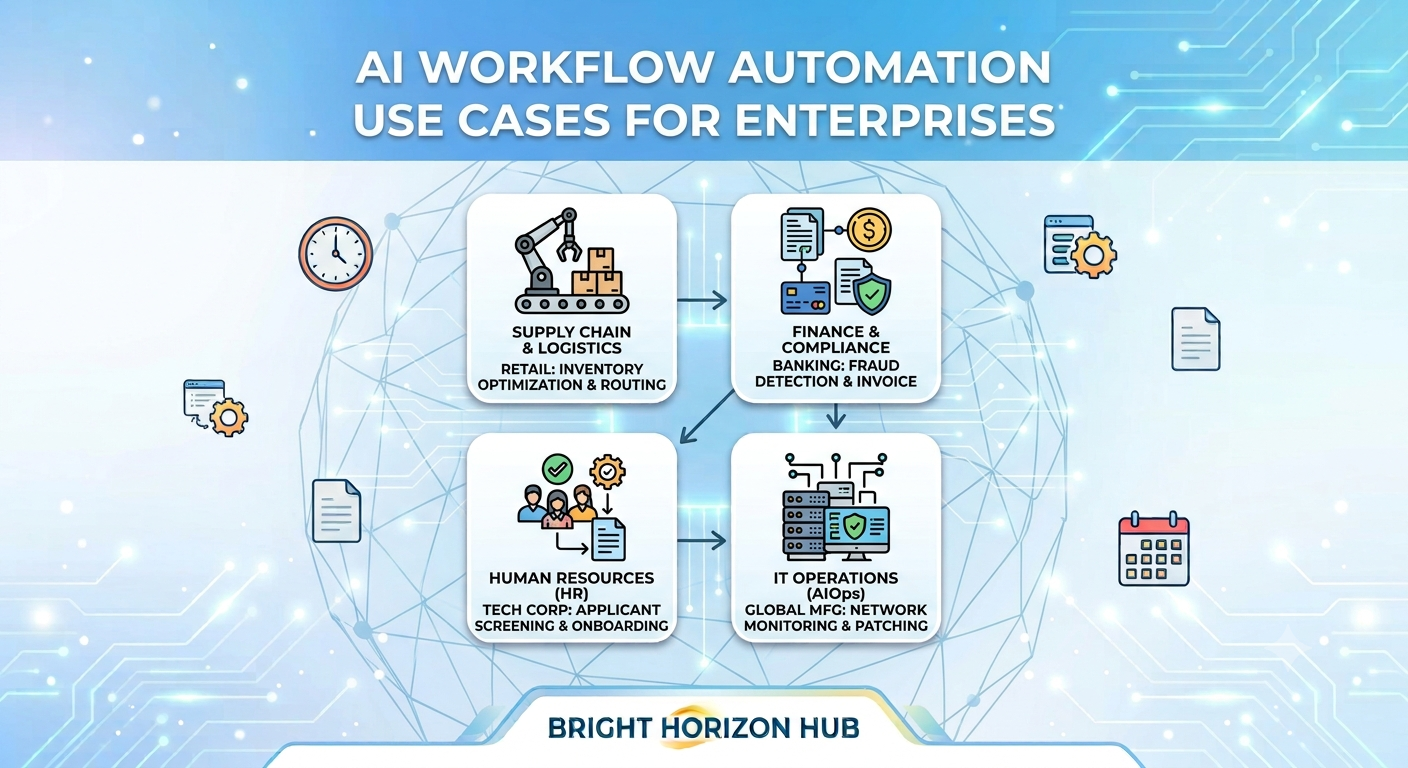
Supply Chain and Logistics
AI workflow automation helps enterprises optimize inventory management and distribution.
Inventory Forecasting
AI predicts future demand using historical sales data, seasonal trends, and purchasing patterns.
Warehouse Automation
Automated workflows manage stock updates, shipment scheduling, and inventory replenishment.
Delivery Optimization
AI analyzes transportation routes, weather conditions, and traffic patterns to improve delivery efficiency.
Document Processing
Enterprises handle thousands of business documents daily.
AI-powered document automation extracts information from:
- Contracts
- Purchase orders
- Insurance claims
- Tax documents
- Loan applications
- Medical records
- Legal agreements
This reduces manual data entry while improving processing accuracy.
Compliance and Risk Management
Regulatory compliance requires continuous monitoring and documentation.
AI automation helps enterprises:
- Detect suspicious transactions
- Monitor policy compliance
- Generate audit reports
- Track regulatory changes
- Identify operational risks
These workflows reduce compliance costs while strengthening governance.
Procurement Automation
Purchasing departments automate vendor management, purchase approvals, supplier evaluations, and contract renewals.
AI recommends preferred suppliers based on pricing, delivery performance, quality ratings, and historical purchasing behavior.
Benefits of AI Workflow Automation for Enterprises
Organizations implementing AI automation experience measurable improvements across business operations.
Higher Productivity
Employees spend less time on repetitive administrative work and more time on strategic initiatives.
Better Decision-Making
AI analyzes large datasets faster than traditional methods, providing valuable insights for executives.
Improved Customer Experience
Faster responses, personalized interactions, and proactive service increase customer satisfaction.
Cost Savings
Automation reduces labor costs, minimizes operational inefficiencies, and lowers processing expenses.
Greater Scalability
AI workflows can handle increasing workloads without requiring proportional increases in staffing.
Best Practices for Enterprise AI Implementation
Successful enterprise automation requires careful planning.
Identify High-Impact Workflows
Focus first on repetitive, high-volume processes that deliver measurable business value.
Ensure Data Quality
Clean, accurate, and standardized data significantly improves AI performance.
Integrate Existing Systems
Connect AI automation with CRM, ERP, HR, accounting, and collaboration platforms for seamless workflows.
Train Employees
Provide ongoing education to help teams understand how AI complements their daily responsibilities.
Monitor and Optimize
Track key performance indicators such as workflow completion time, automation rate, customer satisfaction, and cost savings to continuously improve automation performance.
Future of AI Workflow Automation in Enterprises
Enterprise AI automation continues to evolve rapidly. Emerging technologies such as generative AI, predictive analytics, intelligent document processing, autonomous agents, and conversational AI will enable businesses to automate increasingly sophisticated workflows.
Future enterprise systems will make proactive decisions, optimize operations in real time, and provide personalized recommendations across every department. Organizations that adopt AI workflow automation today will be better prepared to compete in an increasingly digital and data-driven business environment.
Conclusion
The growing number of AI workflow automation use cases for enterprises demonstrates how artificial intelligence is reshaping modern business operations. From customer support and human resources to finance, sales, marketing, IT, and supply chain management, AI-powered automation helps organizations improve efficiency, reduce costs, and enhance decision-making.
By identifying the right workflows, selecting scalable AI solutions, and continuously optimizing performance, enterprises can unlock significant long-term value. As AI technology continues to advance, workflow automation will become an essential foundation for innovation, operational excellence, and sustainable business growth.